

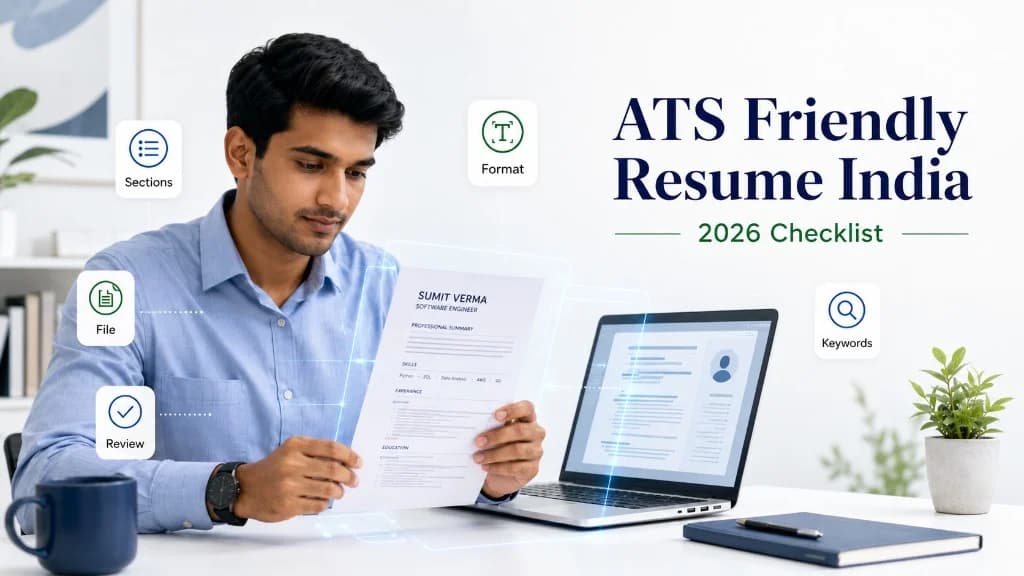
ATS & Screening
ATS Friendly Resume India — Full Checklist
Indian mid-to-large companies now use ATS screening. Here's the exact checklist to make your resume parse correctly — plus how to test it before you apply.
Arvind Tyagi8 min read
Read morePractical, no‑fluff articles that help you align your resume to job descriptions, improve ATS readability, and prepare for real interviews — with clear next steps.
Use the blog + the tool
See how your resume aligns with a job description, what ATS may miss, and what to improve—then apply with confidence.
Showing 12 of 85 articles
Browse by topic or search for a job-readiness question.
Clear, actionable guidance—optimized for employability outcomes.
Indian mid-to-large companies now use ATS screening. Here's the exact checklist to make your resume parse correctly — plus how to test it before you apply.

Applying to dozens of jobs in India and hearing nothing? These are the six real reasons candidates don't get shortlisted — and the specific fix for each one.
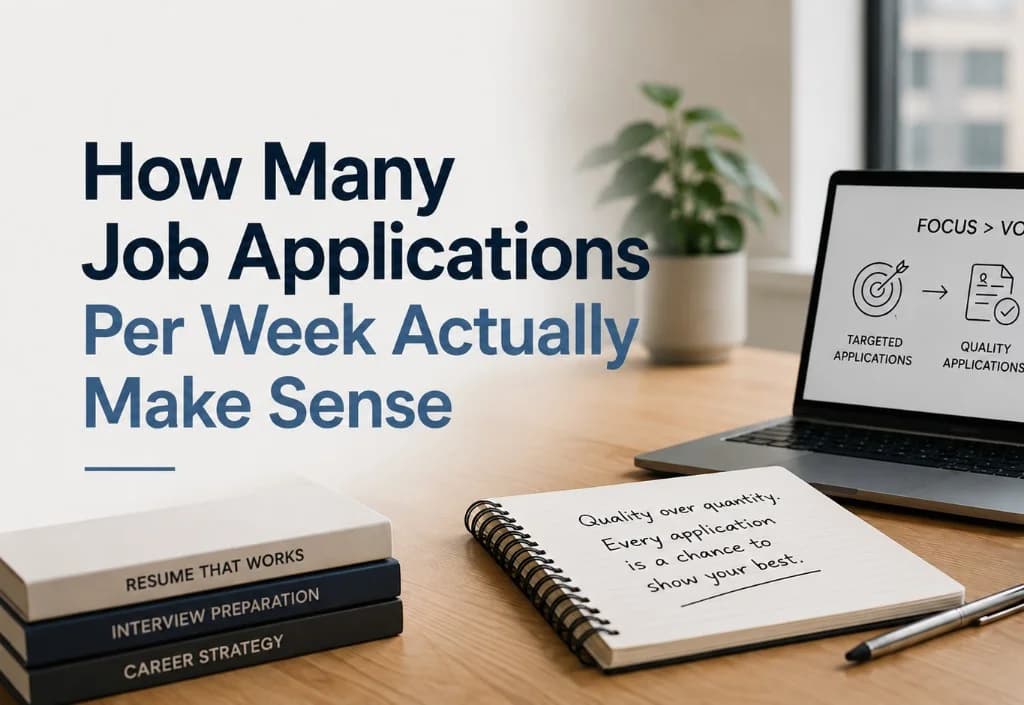
Forget the "apply to 50 jobs a week" advice. Here is what application volume actually correlates with offers — and what does not.

Most quality roles fill through networks before they ever get posted. Here is how the hidden job market actually works — and how to access it.
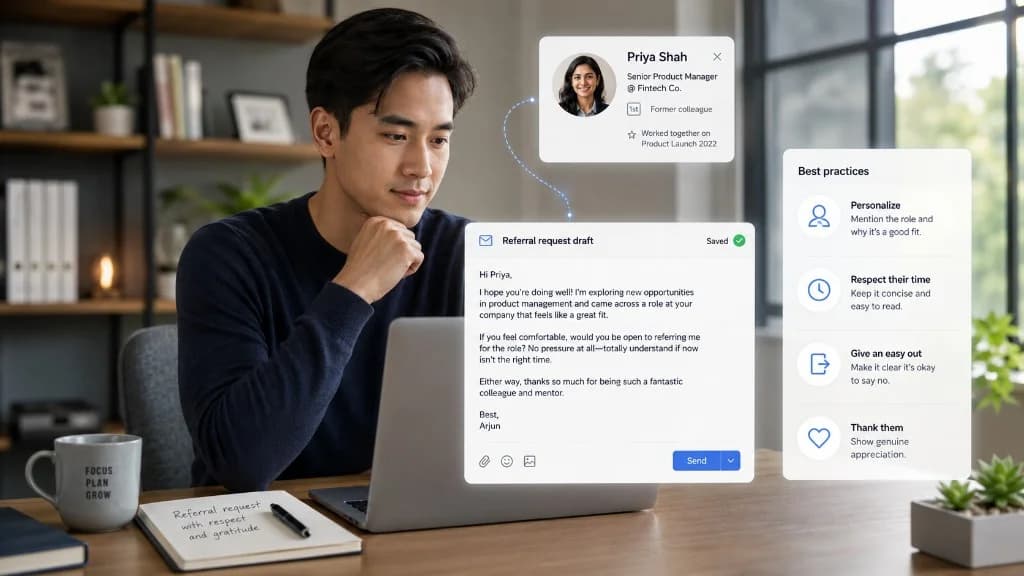
Most candidates ask for referrals badly. Here is the script that works — and the common mistakes that cost relationships and offers.
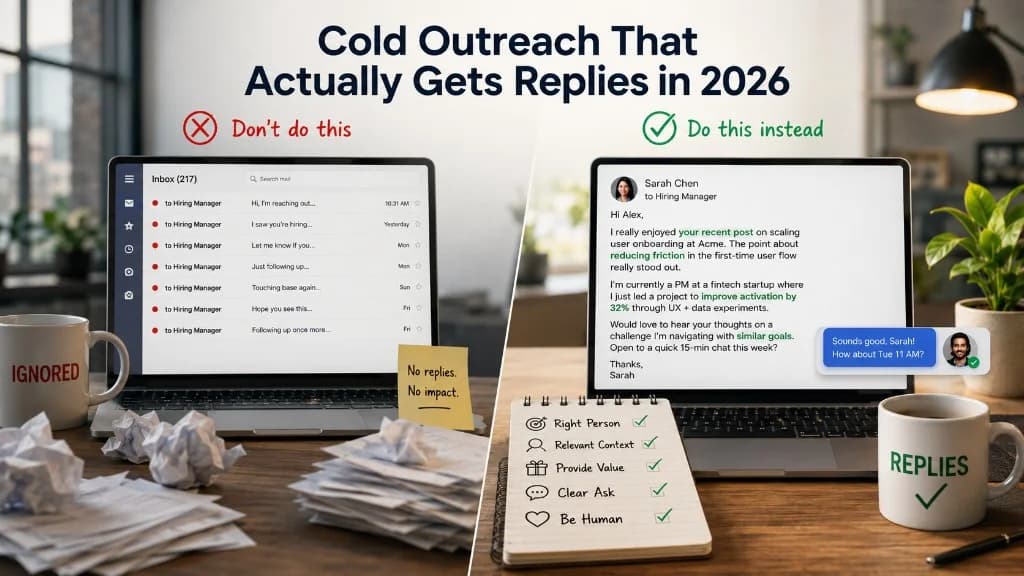
AI-written outreach has flooded inboxes. Here is what still works for cold messages in 2026 — and the specific structure that gets responses.
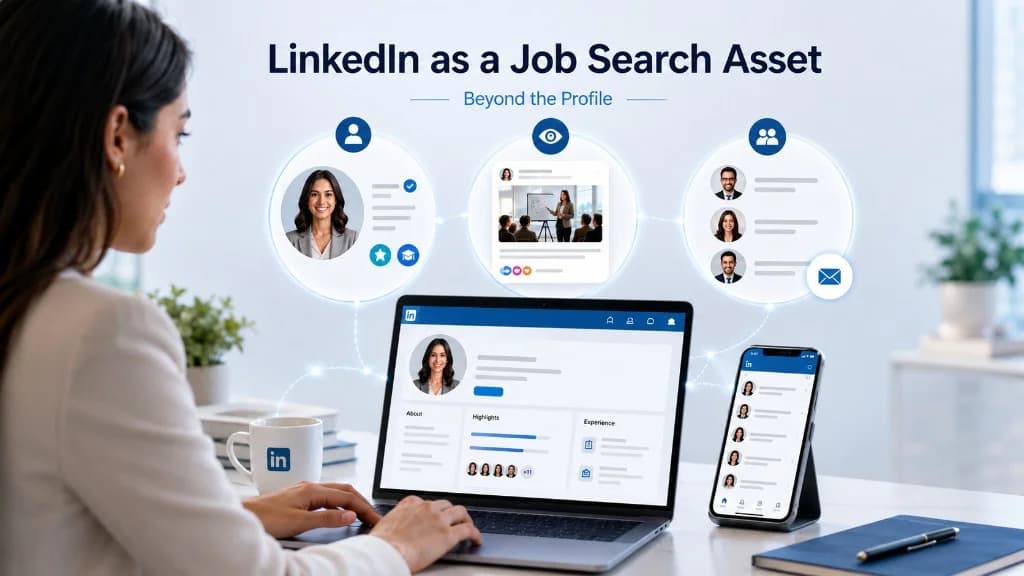
Most candidates treat LinkedIn as a resume that lives online. Used well, it works for you while you sleep. Here are the three layers that matter.

Most career-transition advice is too optimistic. Here is the realistic version for Product Management, Data, Design, and AI/ML — timelines, signals, and paths that actually work.
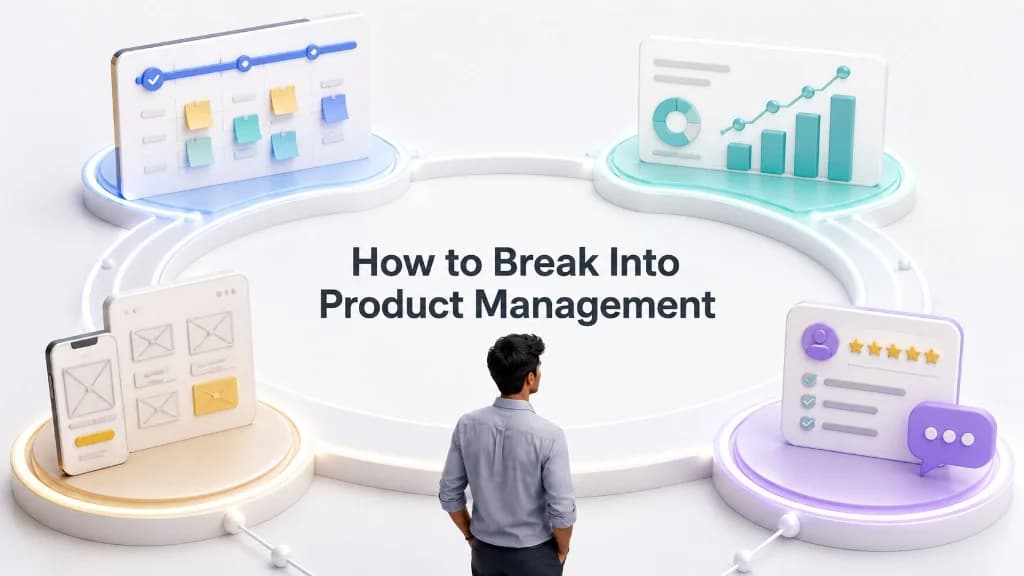
The honest version of the PM transition — without the bootcamp marketing. Real timelines, real entry points, and portfolio work that moves employers.
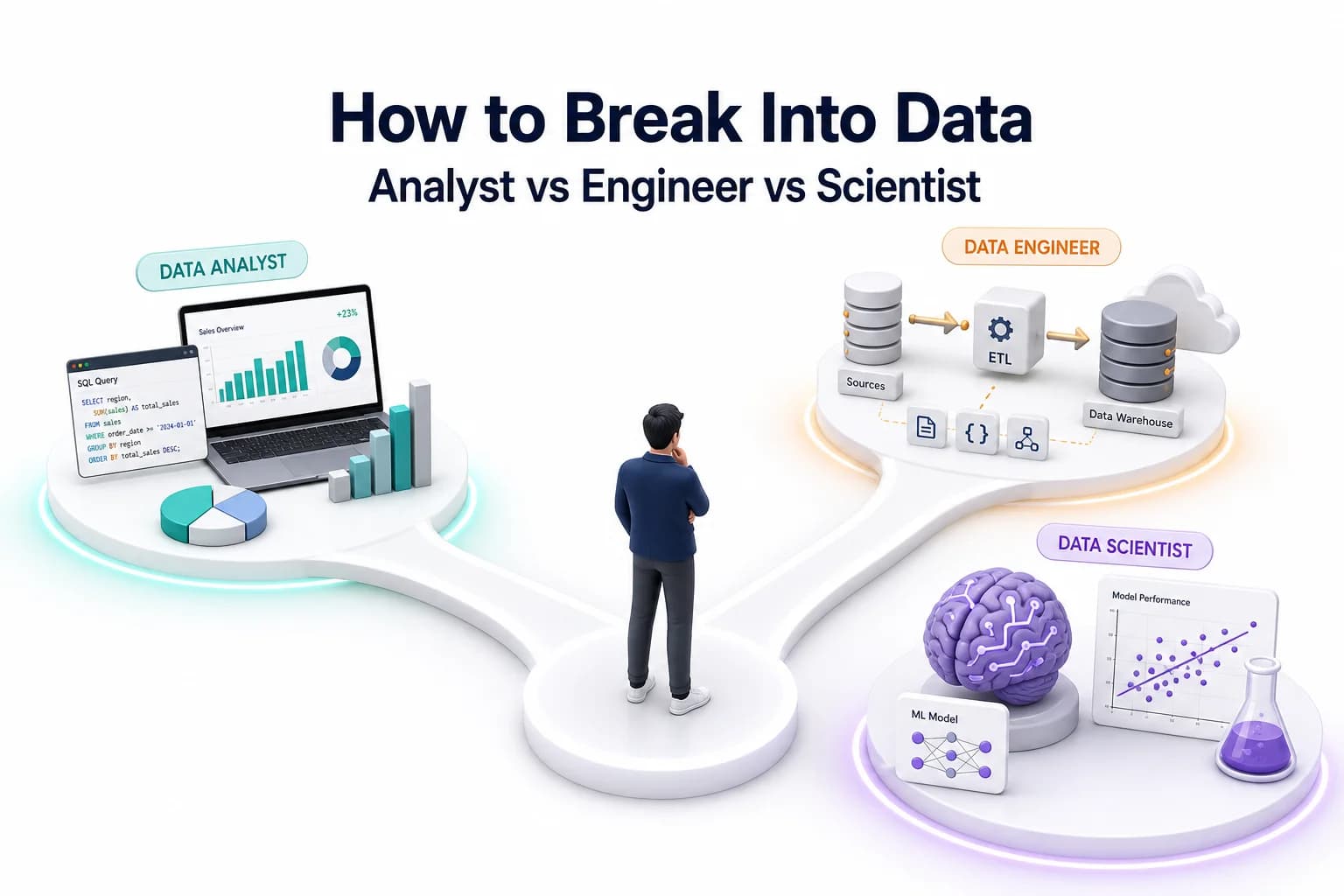
Most candidates conflate three different data roles that hire on different things. Here is how each one actually works — and which fits your background.

Self-taught UX transitions work — but only with the right portfolio. Here is what hiring managers actually look for, and what kills your chances.
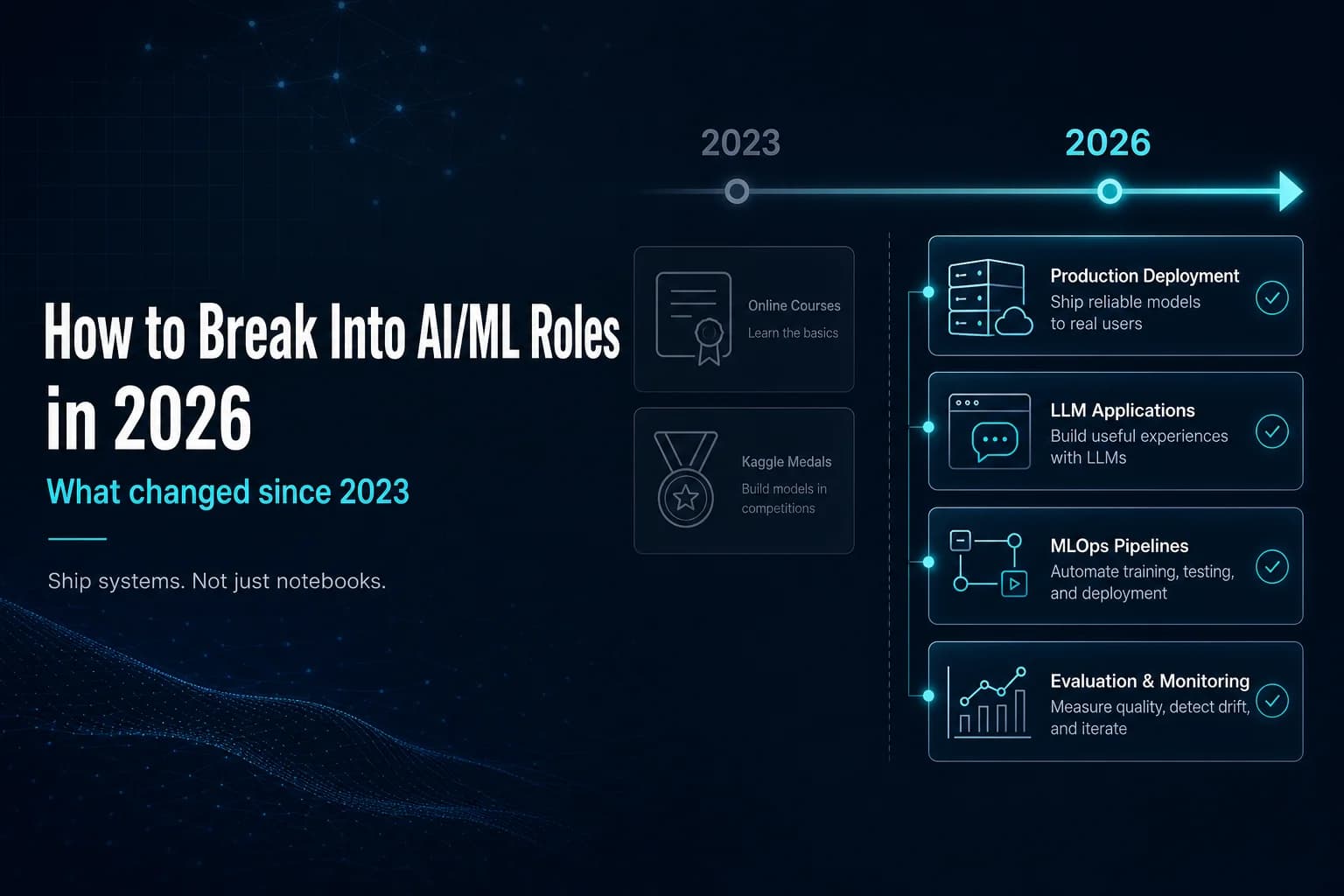
The AI/ML entry path has changed substantially in three years. Here is what works in 2026 — and what advice from 2023 is now misleading.
Occasional emails with resume-to-JD alignment tips, ATS clarity checks, and interview prep playbooks—written for real applications.