
Job Readiness
Technical vs HR Interview Prep — What Changes
Technical and HR interviews test different things. Learn what changes in expectations, preparation style, and answer approach for each round.
Ankur Kumar7 min read
Read morePractical, no‑fluff articles that help you align your resume to job descriptions, improve ATS readability, and prepare for real interviews — with clear next steps.
Use the blog + the tool
See how your resume aligns with a job description, what ATS may miss, and what to improve—then apply with confidence.
Showing 12 of 85 articles
Browse by topic or search for a job-readiness question.
Clear, actionable guidance—optimized for employability outcomes.
Technical and HR interviews test different things. Learn what changes in expectations, preparation style, and answer approach for each round.
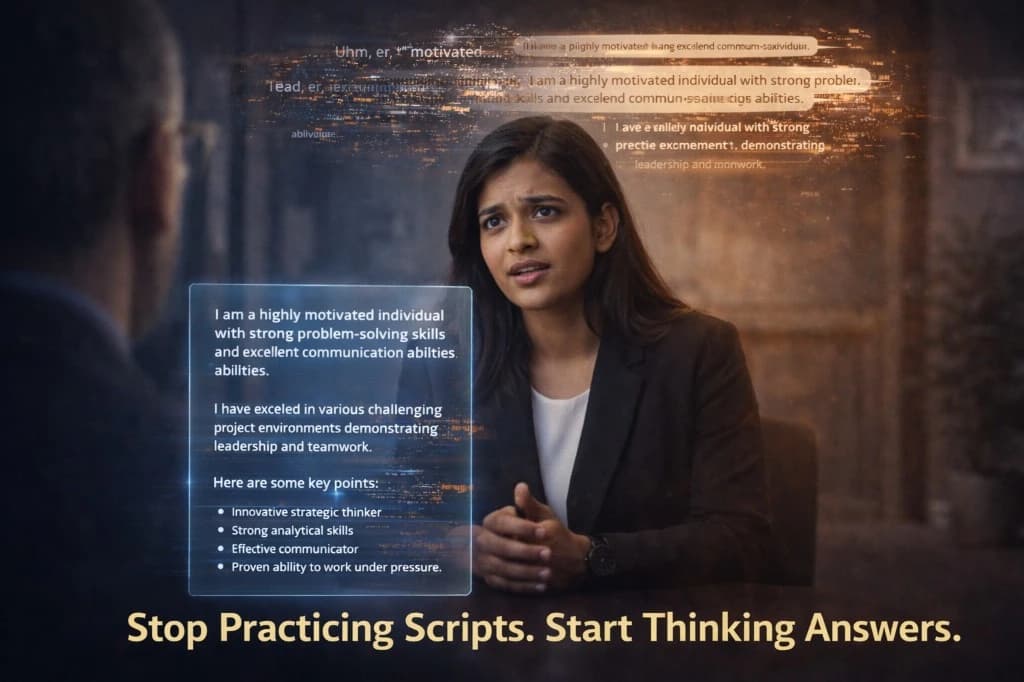
Learn how to practice interview answers naturally without sounding memorized. Improve confidence, structure, and fluency while staying human and role-relevant.

Even strong candidates lose interviews because of avoidable mistakes. Learn 25 interview mistakes that hurt clarity, confidence, role-fit, and recruiter trust.
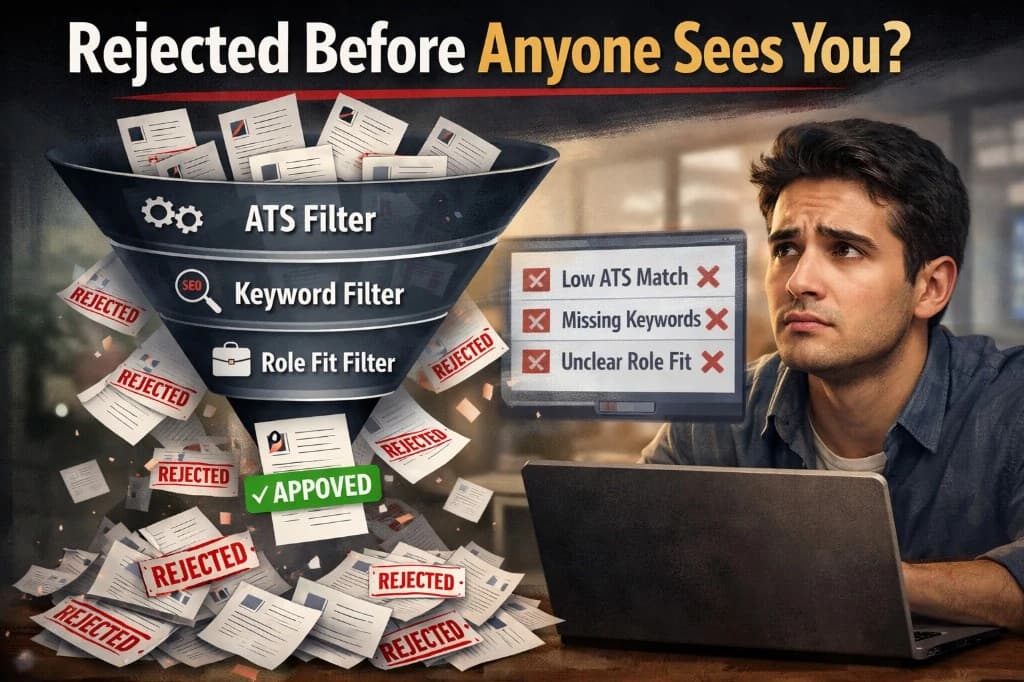
Qualified but still not getting shortlisted? Learn the real reasons job applications fail and how to improve resume fit, ATS visibility, and interview chances.

Qualified candidates can still get rejected before interviews if their resume lacks clarity, role-fit, and visible proof. Learn what hiring teams notice first.
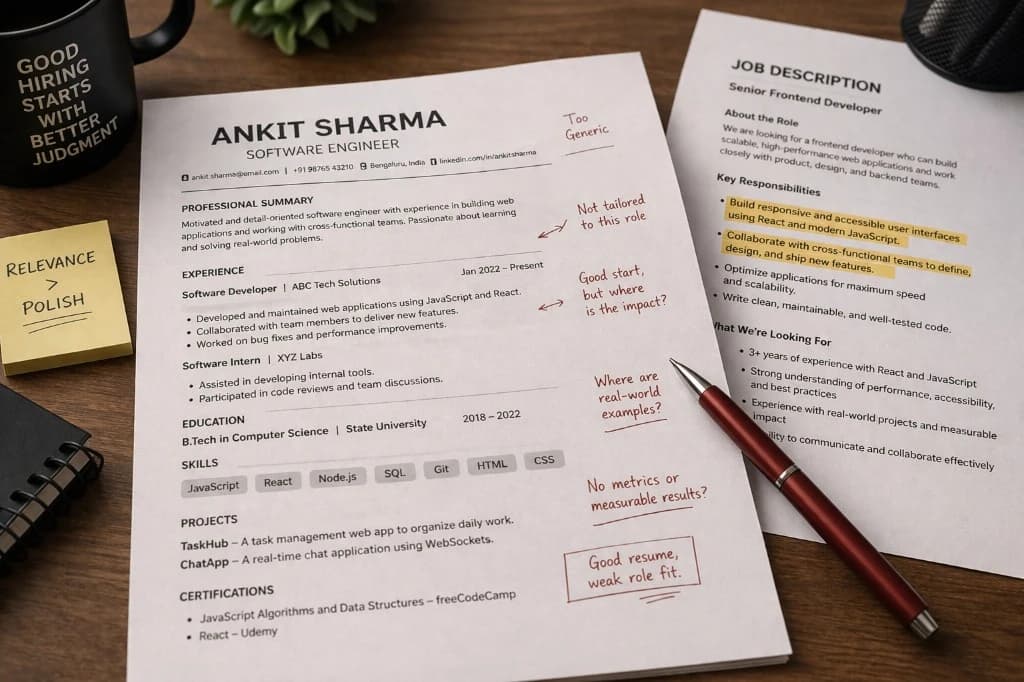
Recruiters often skip resumes in seconds when role-fit, skills, or proof are unclear. Learn the top reasons and how to make your resume stronger.
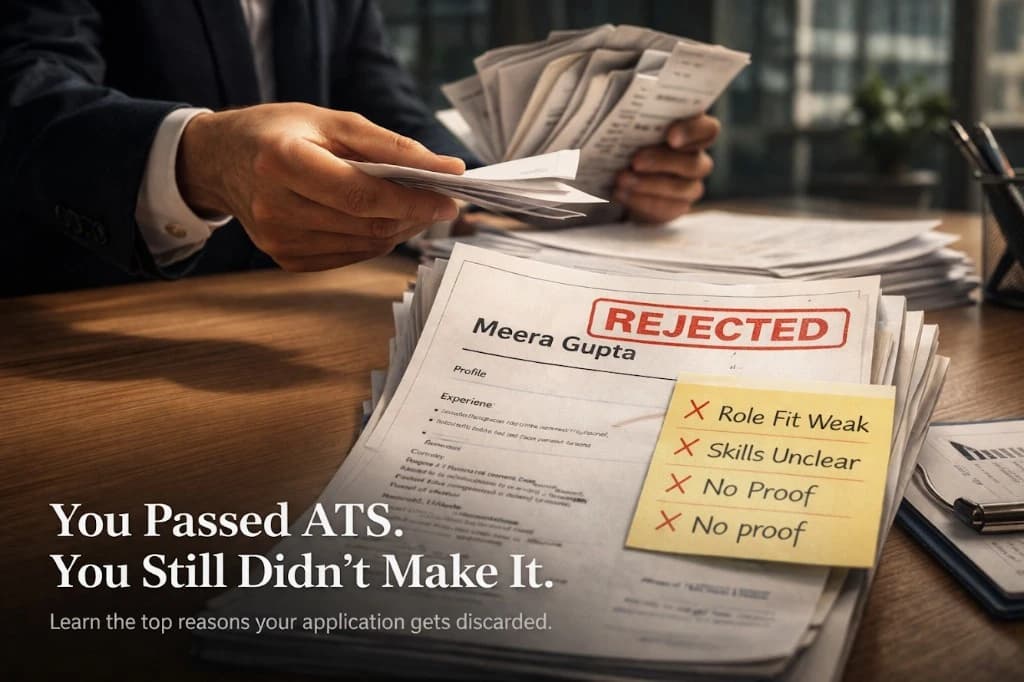
ATS matters, but it is not the only reason candidates miss shortlists. Learn what else hurts resume performance, including weak fit and vague proof.
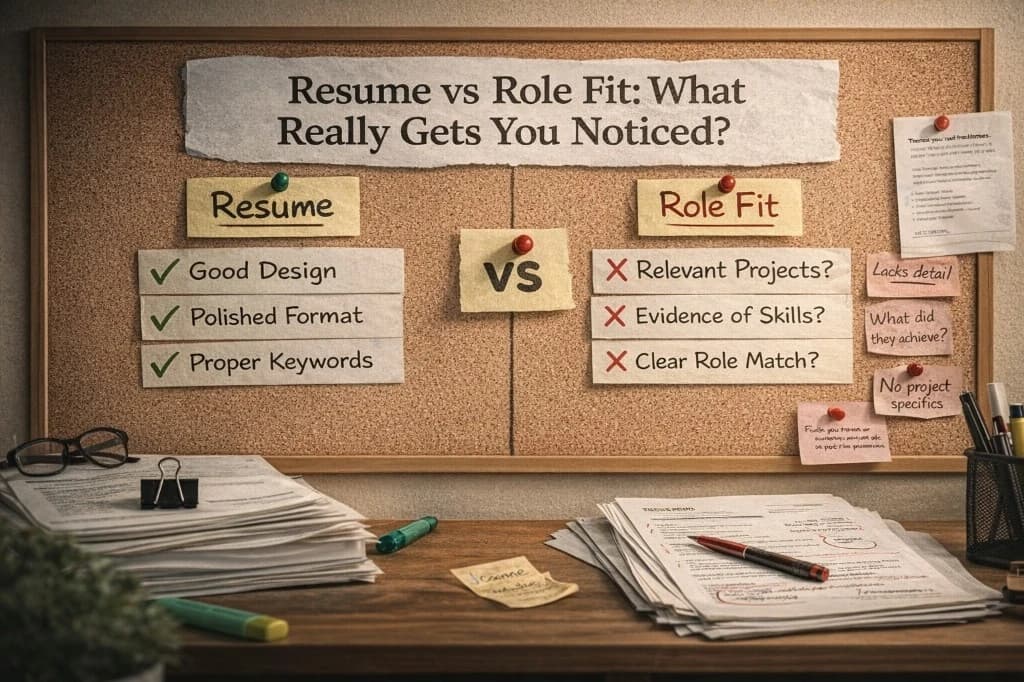
A good-looking resume is not enough if role-fit is weak. Learn what recruiters notice first and why relevance matters more than generic polish.

Applying to many jobs but getting few results? Learn how to diagnose weak role targeting, poor JD alignment, low proof visibility, and shortlist blockers.

Learn how to match your resume to a job description without lying, stuffing keywords, or guessing. Improve ATS visibility and interview chances.

Confused between an ATS resume checker and a resume builder? Learn which one actually improves shortlisting, ATS visibility, and JD alignment.

Learn how to use resume keywords by role without keyword stuffing. Improve ATS visibility, JD alignment, and shortlisting with truthful optimization.
Occasional emails with resume-to-JD alignment tips, ATS clarity checks, and interview prep playbooks—written for real applications.