


How to Build a Job Search That Doesn't Burn You Out
Most job searches burn people out because they are run without a system - endless hours, no boundaries, effort scattered. Here is how to design a search you can sustain.
Practical ways to stay consistent, reduce burnout, and keep your search focused.
Use the blog + the tool
See how your resume aligns with a job description, what ATS may miss, and what to improve—then apply with confidence.
Showing 11 of 11 articles
Browse by topic or search for a job-readiness question.
Clear, actionable guidance—optimized for employability outcomes.

Most job searches burn people out because they are run without a system - endless hours, no boundaries, effort scattered. Here is how to design a search you can sustain.

An unstructured job search expands to fill all your time. A finite daily time budget is the single most important fix for job search burnout.

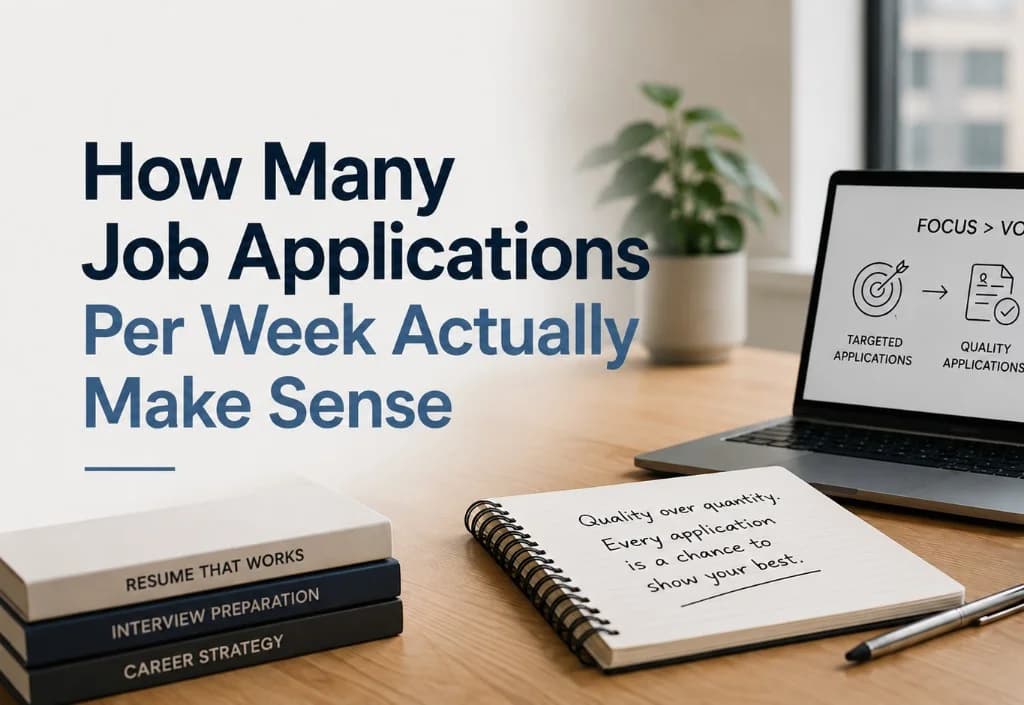
A high volume of generic applications costs maximum energy for minimum result. Why a smaller number of targeted, tailored applications wins.
Measuring a job search only by offers and replies guarantees it feels like failure. Process metrics you control give the search a real progress signal.

A practical, adaptable shape for a job search week — bounded blocks, varied tasks, targeted applications, tracked process, and protected rest.

Most job search burnout is invisible to the person inside it. Here are the seven hidden signs to watch for — and what to do about each one.

Some rejections hit harder than others. Here is a day-by-day playbook for the first week — without the toxic positivity.

Forget the "apply to 50 jobs a week" advice. Here is what application volume actually correlates with offers — and what does not.

Most job seekers wait too long to ask for help. Here is how to tell which kind of help you need — and when to bring it in.

Job search burnout is real, common, and often invisible to the person experiencing it. Here is how to recognize it — and what actually helps.

Job search burnout is not a willpower problem. It is a structural one. Here is why it happens — and why "just push harder" usually backfires.
Occasional emails with resume-to-JD alignment tips, ATS clarity checks, and interview prep playbooks—written for real applications.