
Use This Resume
Entry-LevelModern Professional
A Tax / GST Practitioner resume is judged on whether it proves command of Indian tax law, GST compliance, and client-advisory depth — and on whether it uses the exact statutory and tool language the job description names. Tax and GST roles span a wide spectrum from filing executives to senior advisory, and the JD signals which compliance depth and engagement type are required.
Recruiter-approved templates and real-world examples tailored for tax / gst practitioner roles. Click any resume to customize in seconds.
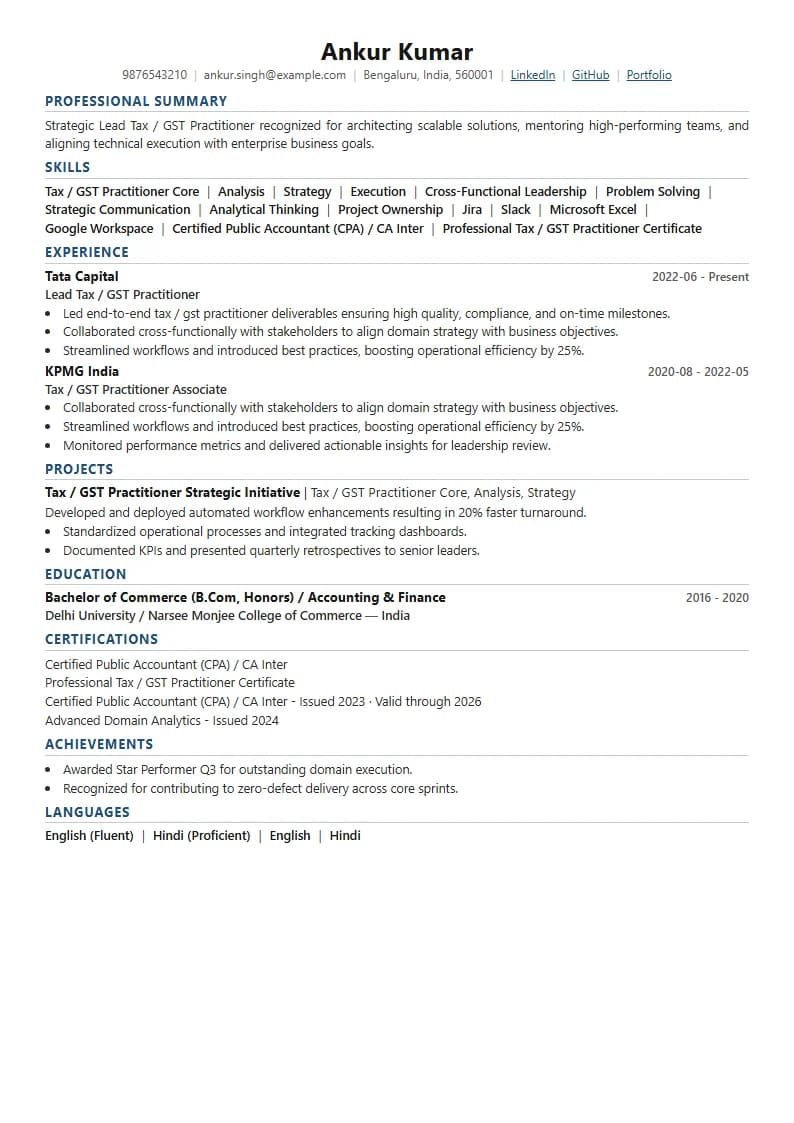
A tax / gst practitioner resume should clearly show relevant programming skills, engineering projects, technical experience and the systems or products you have worked on. Prioritize technologies and responsibilities that genuinely match the target role.
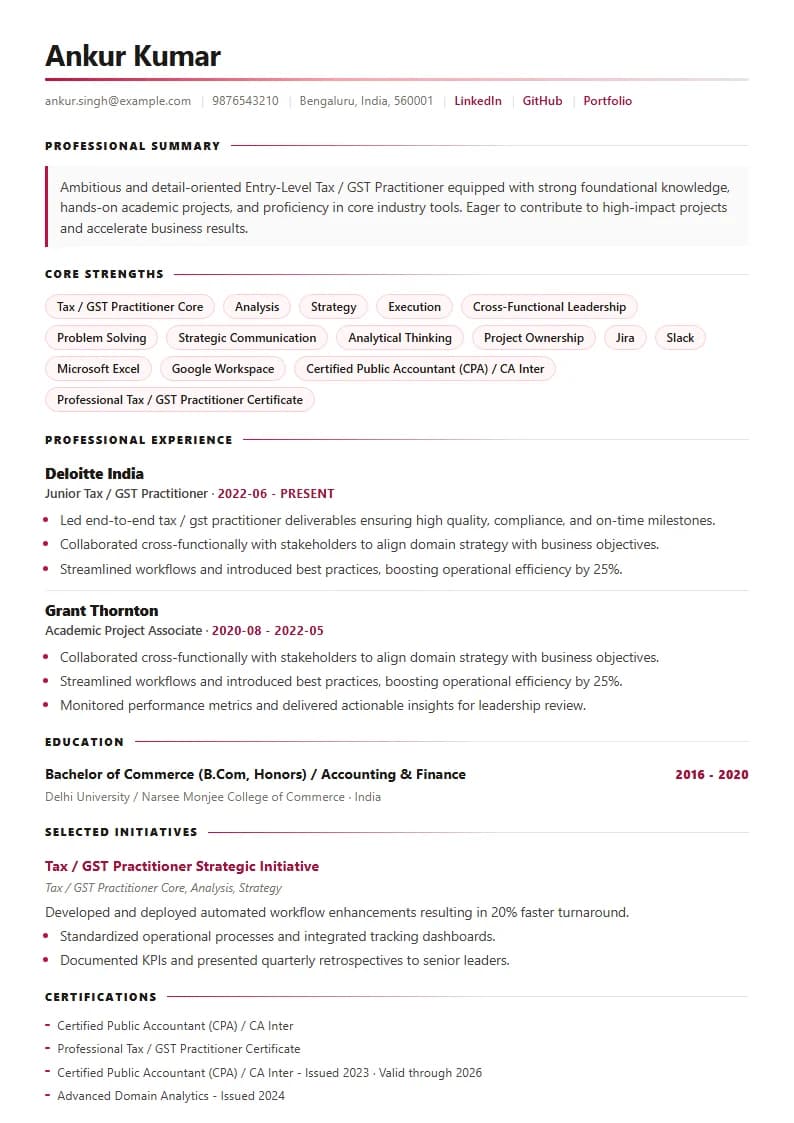
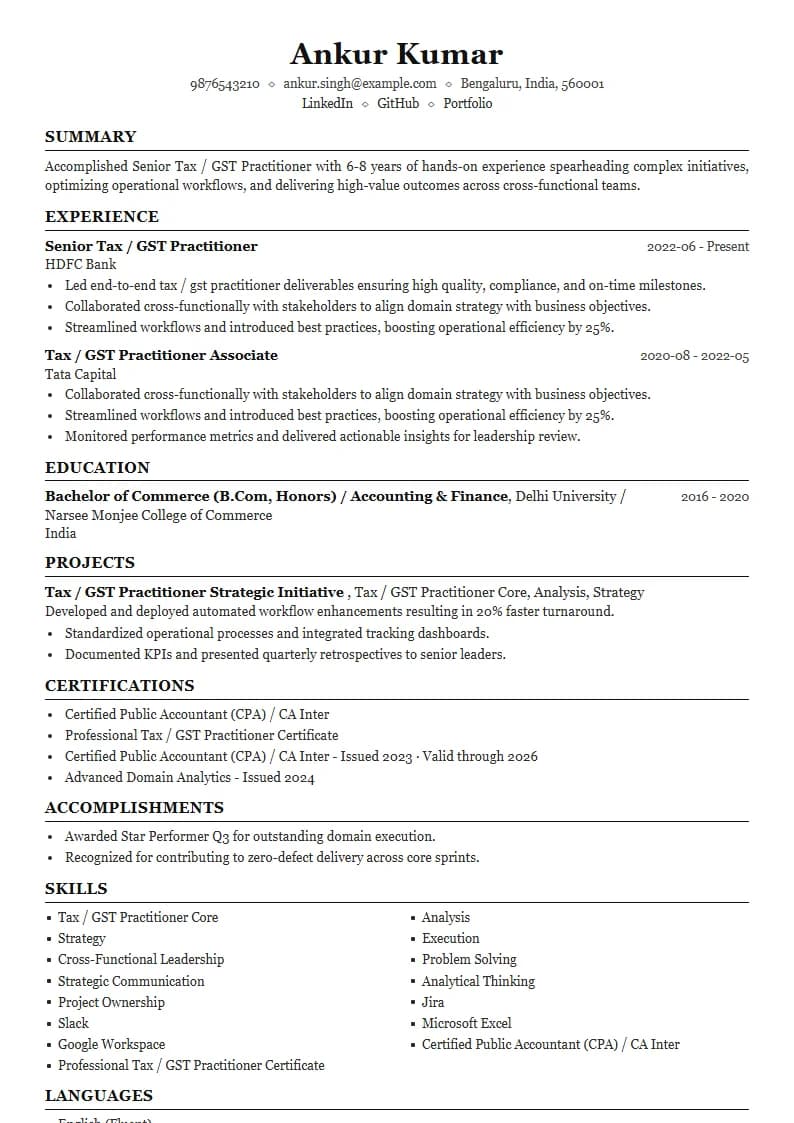
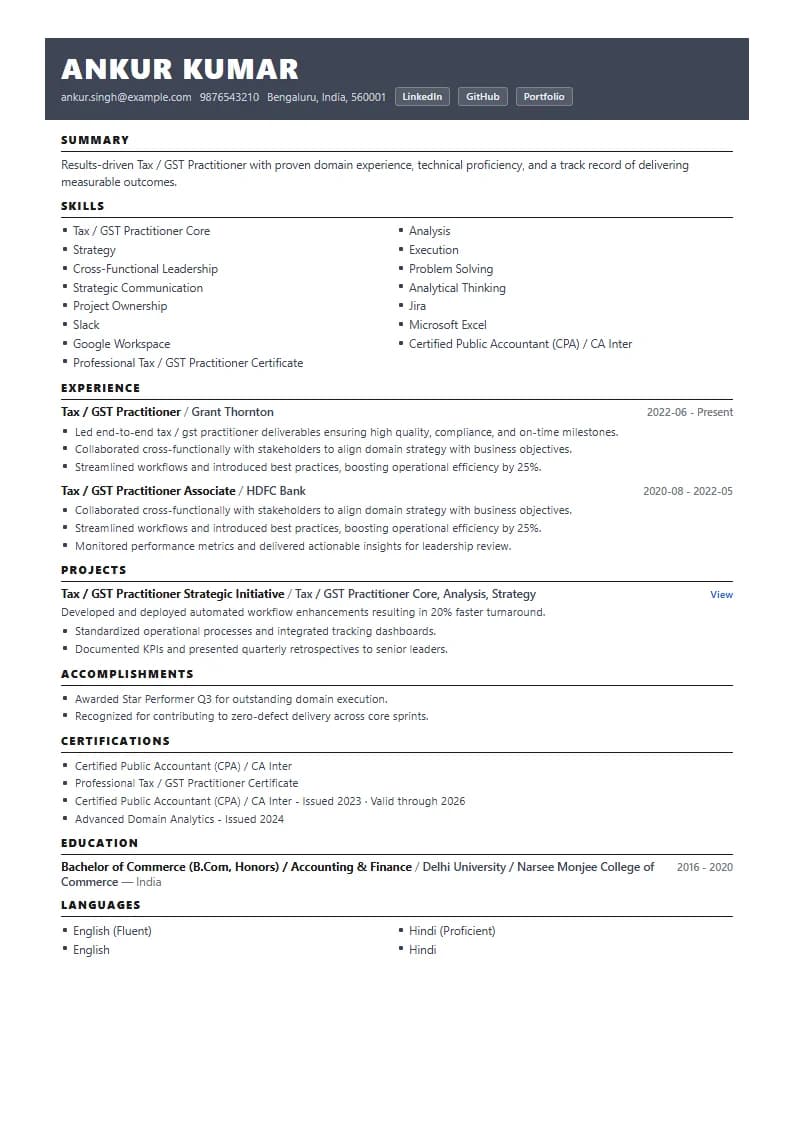
Usable resume sample showing summary structure, categorized skills, and effective experience bullets.
Experienced Tax / GST Practitioner with hands-on domain experience, relevant technical skills, and a focus on delivering quality results matching job descriptions.
Essential domain skills, frameworks and technologies commonly requested for tax / gst practitioner positions.
Follow these structured steps to align your resume with target job descriptions accurately.
Upload your resume and paste the Tax / GST Practitioner JD you are targeting. The free match score shows your alignment now, with the compliance and tool gaps named.
Review the GST compliance, direct-tax, and software gaps. You will see which JD signals your resume is missing or under-weighting by statute or tool category.
Tune and re-check. Get a JD-matched version; re-run the score to confirm the compliance and advisory gaps closed before you submit.
Resume Diagnostic
Want to know if your resume is ATS-friendly? Check it with our free AI tool below!
Drop your resume here or . PDF & DOCX only. Max 5MB file size.
FAQ Help
Build yours next
Verify GST compliance keywords, direct-tax signals, tool proficiency, and score instantly.
Your resume data is private, secure, and used solely for diagnostic matching.