Use This Resume
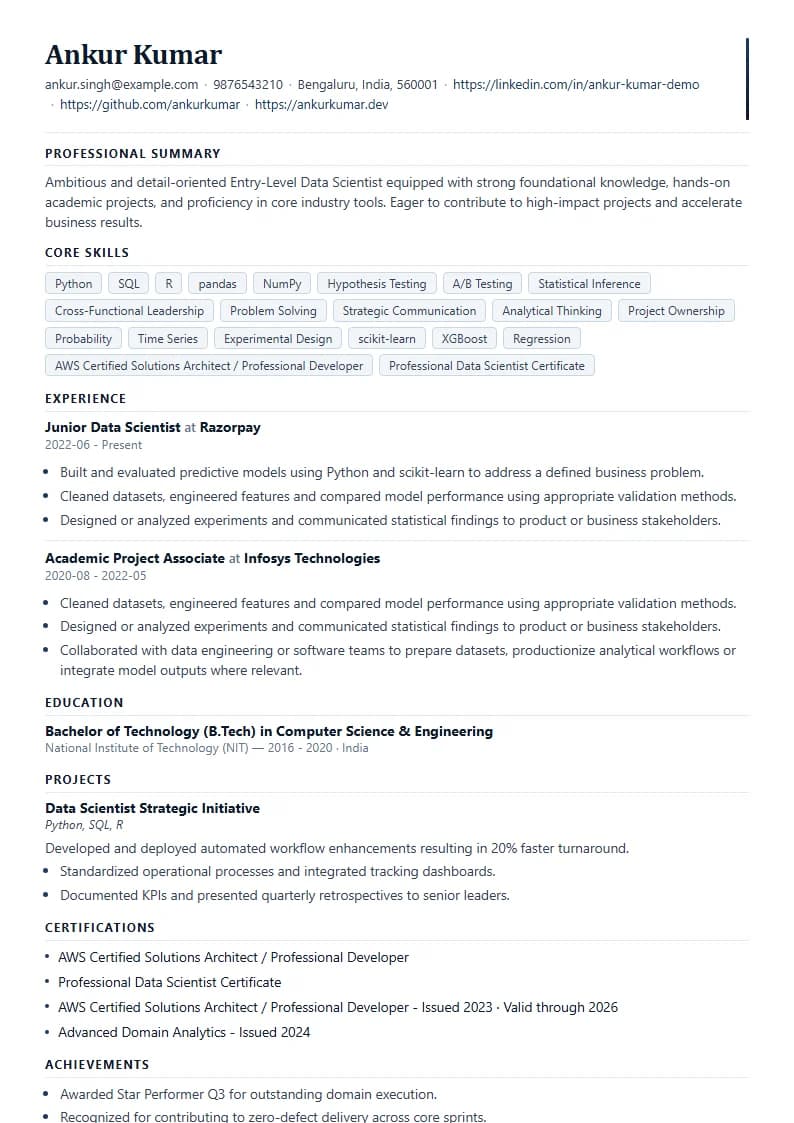
Entry-LevelTimeless Serif Classic
Build a data scientist resume that clearly shows how you use statistics, machine learning and programming to solve real problems and support decisions. Highlight relevant experience with Python, SQL, experimentation, predictive modeling and data platforms where they genuinely reflect your work, then tailor the emphasis to the specific job description before applying.
Recruiter-approved templates and real-world examples tailored for data scientist roles. Click any resume to customize in seconds.
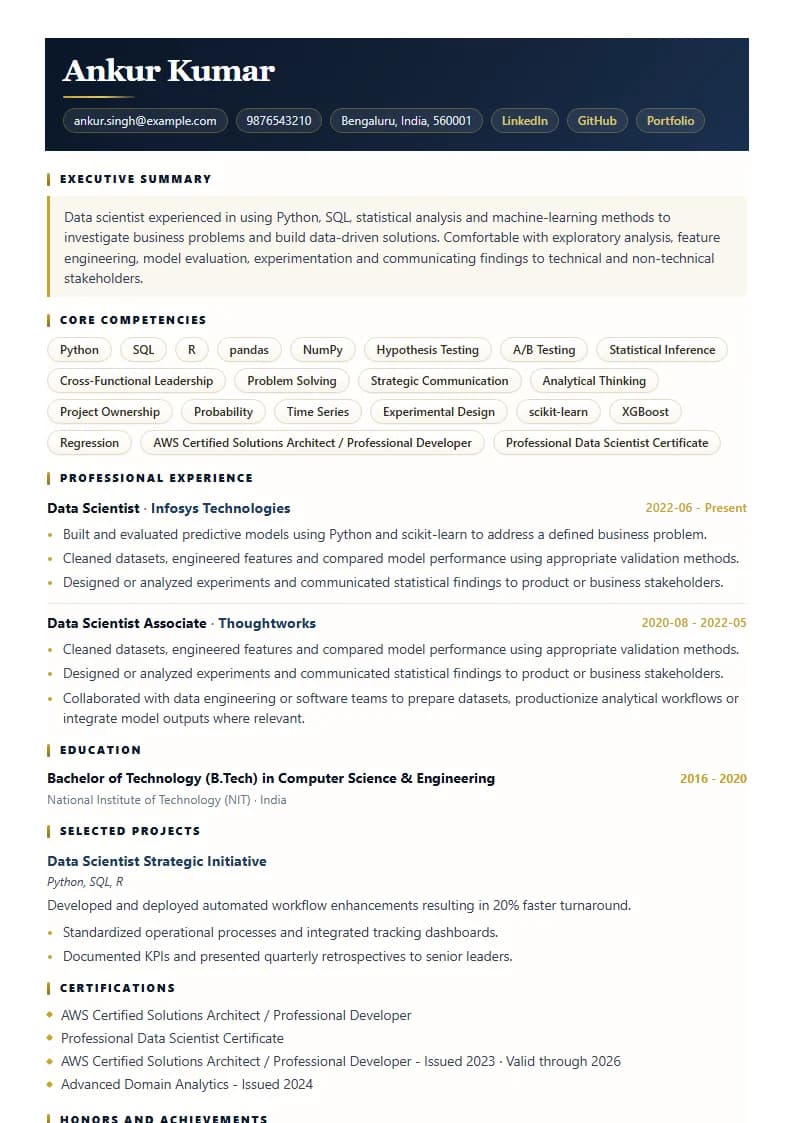
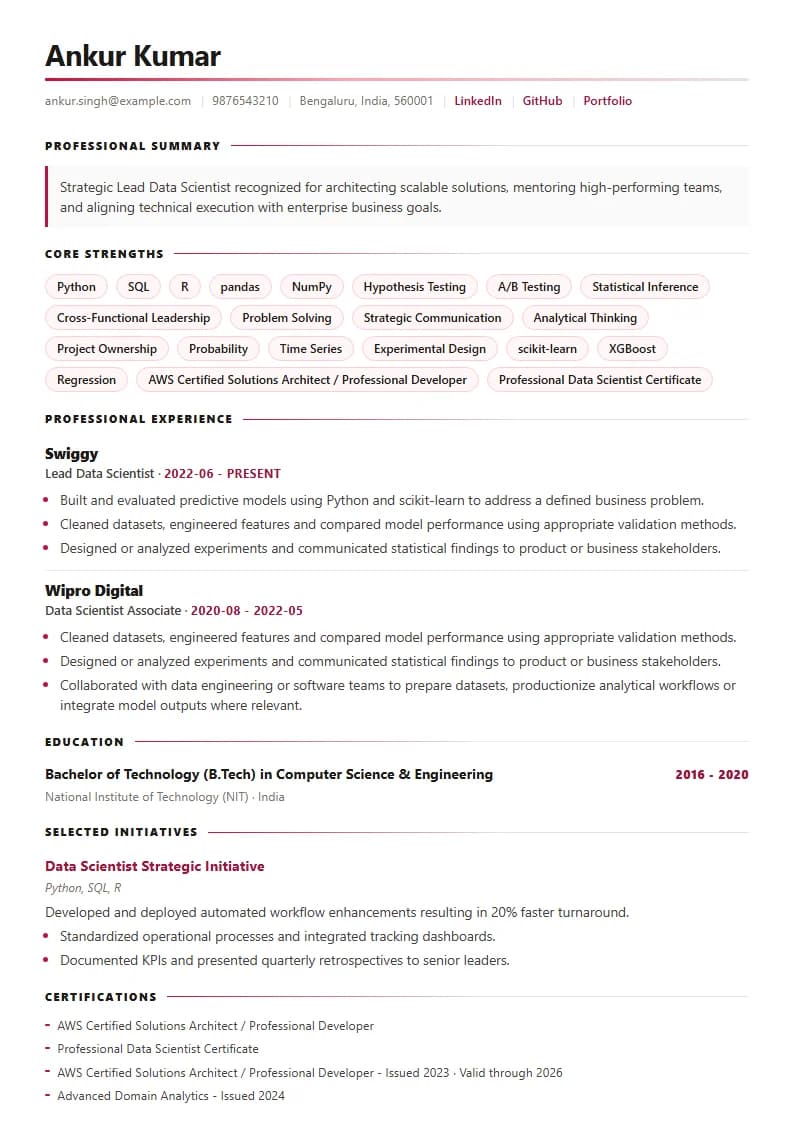
A data scientist resume should clearly show relevant programming, statistical analysis, machine-learning experience, projects and the problems your work helped solve. Prioritize methods, tools and business outcomes that genuinely match the target role, and demonstrate important technical skills through experience or projects rather than listing them without context.
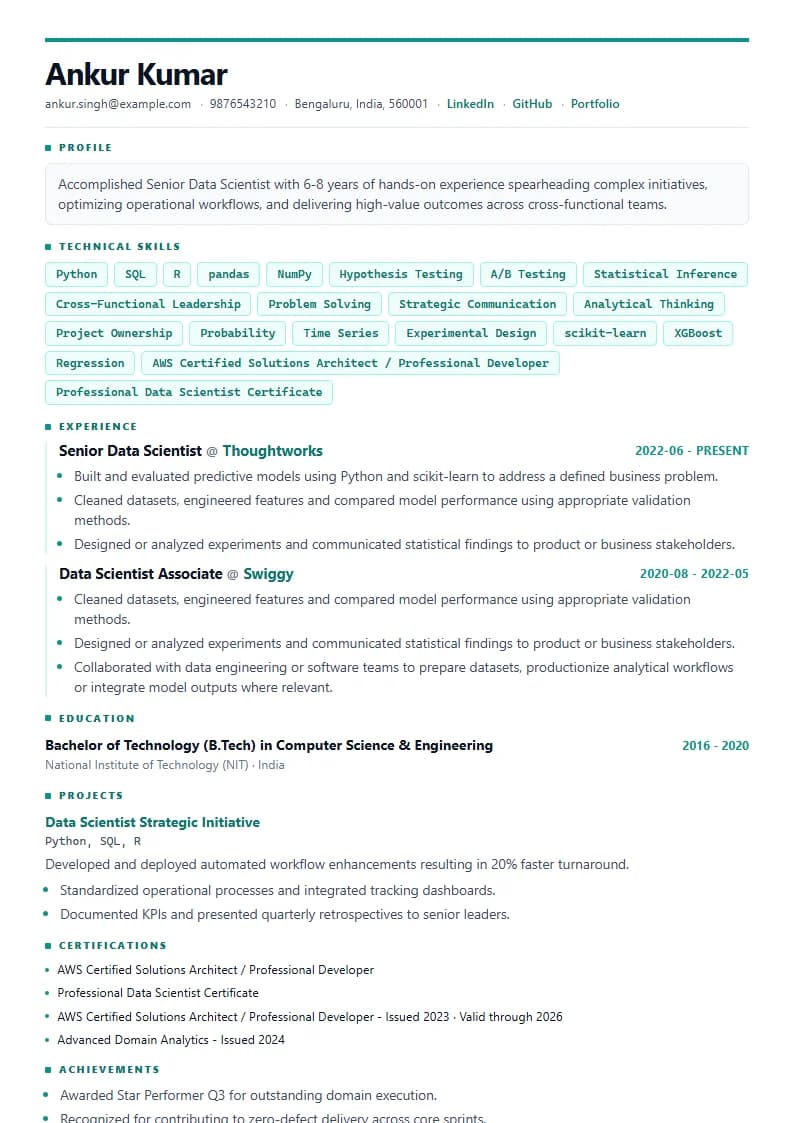
Usable resume sample showing summary structure, categorized skills, and effective experience bullets.
Data scientist experienced in using Python, SQL, statistical analysis and machine-learning methods to investigate business problems and build data-driven solutions. Comfortable with exploratory analysis, feature engineering, model evaluation, experimentation and communicating findings to technical and non-technical stakeholders.
If professional experience is limited, include projects that demonstrate the complete analytical or modeling workflow: the problem, dataset, cleaning approach, feature engineering, method selection, evaluation and final insight or application. Include GitHub, notebooks, Kaggle or another public portfolio link only when the work strengthens your application and is appropriate to share.
Customer Churn Prediction: Python · pandas · scikit-learn · SQL — cleaned customer data, engineered features, compared baseline classification models, evaluated performance and summarized the business implications of the results.
Essential domain skills, frameworks and technologies commonly requested for data scientist positions.
Target key expectations based on your current career stage and technical range.
Python, SQL & End-to-End Projects
Focus on Python, SQL, statistics, machine-learning fundamentals, internships, coursework and end-to-end projects. Show the problem you investigated, the dataset used, the methods you applied, how you evaluated the result and what you learned or communicated.
Model Ownership & Stakeholder Impact
Emphasize ownership of analyses, experiments or machine-learning projects, stronger model evaluation, stakeholder collaboration and increasingly complex business problems. Include genuine impact metrics where they are available and verifiable.
Technical Ownership & Modeling Strategy
Highlight problem framing, technical ownership, experimentation or model strategy, complex datasets, cross-functional influence, mentoring and production trade-offs where they genuinely reflect your experience.
Follow these structured steps to align your resume with target job descriptions accurately.
Review the job description for role emphasis, programming languages, statistical methods, experimentation, machine-learning techniques, data platforms, production requirements and stakeholder expectations.
Identify where you have genuinely used those methods, tools or responsibilities in professional work, research, internships or relevant projects.
Adjust your summary, skills, projects and experience emphasis where appropriate, then compare your resume with the actual job description before applying.
Resume Diagnostic
Want to know if your resume is ATS-friendly? Check it with our free AI tool below!
Drop your resume here or . PDF & DOCX only. Max 5MB file size.
FAQ Help
Build yours next
Compare your resume with the Data Scientist role you are targeting and review statistical methods, machine-learning experience, technical tools and project alignment before deciding what genuinely needs to be updated.
Your resume data is private, secure, and used solely for diagnostic matching.