

How to Prepare for Interviews Role-by-Role
ઓવરવ્યૂ: Learn how to prepare for interviews role-by-role instead of using generic answers. Improve confidence, relevance, and interview performance for the exact job.
Introduction
A lot of candidates prepare for interviews in a very generic way. They search for things like:
- common HR questions
- top interview questions
- how to answer tell me about yourself
- interview tips for freshers
- interview confidence tips
That helps a little. But it is usually not enough.
Because most interviews are not really testing whether you memorized general answers. They are testing whether you make sense for this role. That is the key shift many candidates miss.
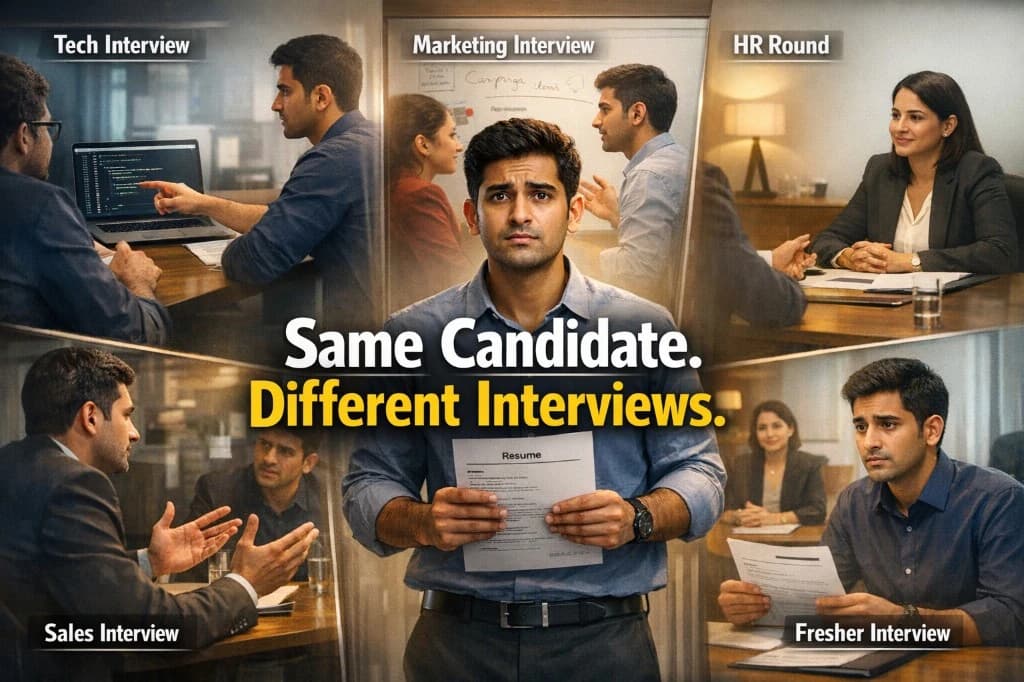
A sales interview is different from a data interview. A marketing interview is different from an HR interview. A software interview is different from an operations interview. A fresher internship interview is different from a working professional switch interview. Even when the same question appears, the expected answer changes based on the role.
That is why generic interview preparation often creates generic interview performance. And generic performance rarely feels strong.
If you want better interview outcomes, you need a different approach: prepare role-by-role, not randomly. That means:
- understanding what the role is actually evaluating
- identifying the right stories, examples, and proof
- practicing in the language of the role
- preparing for the exact type of questions that role usually triggers
- learning how to sound relevant, not rehearsed
In this guide, we will break down:
- why role-based interview prep works better
- how different job roles create different interview expectations
- how freshers should prepare when they have low experience
- what to study before the interview
- how to practice without sounding robotic
- what to do before your next interview to improve confidence and clarity
Why generic interview prep usually fails
A lot of candidates try to "prepare for interviews" without being specific. So they do things like: memorize a self-introduction prepare one strengths and weaknesses answer watch general interview videos read a few HR questions learn some body language tips This is not useless. But it is incomplete.
Because interviews are not just checking confidence. They are checking: fit role awareness communication relevance examples thinking style problem-solving style clarity of motivation seriousness about the role And all of that changes depending on the role.
For example: a recruiter for an analyst role may want structured thinking, numbers, tools, and clarity a recruiter for a marketing role may want examples, creativity, channel awareness, and audience understanding a recruiter for HR may want people handling, coordination, and communication maturity a recruiter for software may want technical thinking, debugging logic, and practical project depth So if your preparation is too broad, your answers often sound broad too. And broad answers make candidates feel weak even when they are capable.
What role-by-role interview preparation actually means
Role-by-role interview preparation does not mean memorizing 100 role-specific answers. It means understanding five things clearly:
1. What the role is meant to do
What problem is this person being hired to solve?
2. What skills matter most
What abilities, tools, or traits are likely to be judged?
3. What proof you can already show
Which projects, internships, experiences, or situations support your fit?
4. What kind of questions are likely
Will the interview focus more on: technical ability problem-solving people interaction communication execution ownership learning ability
5. What language the role expects
A data candidate and a content candidate should not sound the same. The best interview prep helps you speak in the logic of the role.
The biggest interview mistake candidates make
Many candidates prepare answers. Very few prepare relevance. That is the difference. A candidate may answer: "Tell me about yourself" very confidently but still sound weak because the answer does not help the interviewer understand: why this person fits the role what proof supports that what direction they have what they are good at in the context of this job
So the problem is not always lack of confidence. Sometimes it is lack of role alignment. That is why interview prep should not begin with questions. It should begin with the role.
Start with the JD, not random interview questions
The best place to begin interview prep is the job description. Why? Because the JD usually tells you: what the job involves what skills matter what tools matter what problems the company cares about what kind of candidate they are trying to find If you prepare without using the JD, you are preparing blindly.
A much better method is this:
Step 1: Read the JD properly
Highlight: responsibilities tools required skills preferred skills repeated words business outcomes
Step 2: Turn the JD into interview themes
For example, if the JD mentions: reporting stakeholder communication SQL dashboarding business insights then your interview preparation should cover: examples of reporting work how you communicate findings your SQL or related tool exposure dashboard projects how you interpret data
Step 3: Match your own proof to those themes
Now identify: projects internships coursework certifications practical examples college work that support those interview themes. This is what strong role-based preparation looks like.
Pair this guide with a JD-led resume check so your proof on paper matches what you plan to say in the room.
How interview expectations change by role
Different roles create different interview expectations.
For marketing roles
- campaign understanding
- content thinking
- audience awareness
- analytics basics
- channel familiarity
- creativity with structure
For data or analyst roles
- tools like Excel, SQL, Power BI, Python
- structured thinking
- interpretation ability
- project understanding
- logic and numbers comfort
For HR roles
- communication maturity
- people handling
- coordination ability
- hiring workflow understanding
- professionalism
For operations roles
- ownership
- reliability
- process understanding
- handling pressure
- execution discipline
For software roles
- coding fundamentals
- problem-solving
- debugging approach
- project depth
- technical clarity
For sales or business development roles
- communication confidence
- persuasion
- handling rejection
- energy
- customer understanding
- activity orientation
This is why one interview prep style cannot serve all roles equally well.
What strong interview preparation should include
A good role-specific interview prep plan usually includes:
1. Self-introduction tailored to the role
Not generic.
2. Five to seven proof stories
These can come from: projects internships college responsibilities freelance work certifications with practical work volunteer roles
3. Role-specific knowledge review
The basics you should know for the role.
4. Expected question categories
- tell me about yourself
- why this role
- why this company
- project-based questions
- skill-based questions
- situation-based questions
- weakness / challenge questions
- role-specific problem questions
5. Mock practice
You need speaking practice, not just silent preparation.
How freshers should prepare when they have less experience
Freshers often feel lost because they think interview preparation depends on experience. It does not. It depends on proof. Freshers may not have long work histories, but they can still prepare strongly using: projects internships toolscoursework certifications competitions campus roles volunteer work real examples of learning and execution
The key is to stop apologizing for being a fresher. Instead, prepare to show: direction seriousness practical exposure willingness to learn role relevance Freshers do not need to sound senior. They need to sound prepared.
Why answers sound weak even when candidates know the content
This is another common problem. A lot of candidates do know what they want to say. But their answers still feel weak because: they speak too broadly they do not use examples they do not connect the answer to the role they speak in textbook language they sound memorized they ramble without structure
That is why preparation should not only be about information. It should also be about delivery structure. A strong interview answer usually has: a direct opening a relevant example a useful outcome or learning a role connection This is much better than giving vague motivational responses.
A practical framework for role-by-role interview prep
Use this before any important interview.
Visual framework
- 1
Read the JD carefully
Extract responsibilities, tools, role expectations, and repeated skill words.
- 2
List what the interviewer is likely evaluating
Ask: what are they trying to confirm about me?
- 3
Build your proof bank
Prepare five to seven examples from projects, internships, assignments, practical tasks, teamwork, and problem-solving situations.
- 4
Prepare your role-based self-introduction
Your introduction should help the interviewer place you quickly.
- 5
Practice common questions with role relevance
Do not answer generically. Answer in the logic of the role.
- 6
Practice speaking out loud
You need oral fluency, not only mental clarity.
- 7
Review your weak spots
Technical basics, confidence, examples, structure, role knowledge—which feels shaky?
- 8
Prepare thoughtful questions to ask
Strong candidates also ask better questions.
What role-by-role prep improves
When you prepare properly for the exact role, you usually improve: confidence clarity answer relevance project explanation quality less rambling better interviewer trust better alignment between your background and the role That is why it converts better than generic preparation.
Final thought
Interview preparation is not about sounding impressive in general. It is about sounding relevant for the role in front of you. That is the difference between: random prep and strategic prep generic answers and believable answers nervous talking and confident relevance So before your next interview, do not just search: “Top interview questions.” Start with a better question: What does this role need me to sound ready for? That is where stronger interview performance begins.
This interview prep cluster (and where to go next)
This article is the pillar for role-by-role interview readiness. Use it alongside focused guides on JD-led prep, fresher proof, technical versus HR rounds, natural practice, and common mistakes—as those supporting articles go live on the blog.
- How to Prepare for an Interview Using the Job Description
- Fresher Interview Prep: What to Prepare When You Have Low Experience
- Technical vs HR Interview Preparation: What Actually Changes
- How to Practice Interview Answers Without Sounding Scripted
- 25 Interview Mistakes That Quietly Hurt Strong Candidates
Until then, tighten your resume–JD alignment with How to Match Your Resume to a Job Description Before You Apply and the shortlist pillars so your story and your documents tell the same role-fit narrative.
Closing section
FAQ
Resume guides
Related Resume Guides
પ્રાઇસિંગ
તમારો પ્લાન પસંદ કરો અને ઝડપથી શરૂઆત કરો
ફીચર્સ, ભાવ અને ઉપયોગ સ્પષ્ટ રીતે સરખાવો, પછી તમારા લક્ષ્યને અનુરૂપ પ્લાન પસંદ કરો.
આગલું પગલું
તમારા રેઝ્યૂમેને સાચા જૉબ ડિસ્ક્રિપ્શન સામે ચકાસો
Apply પહેલાં JD match, keyword visibility અને skill gaps જુઓ.
સંબંધિત વાંચન
9તાજેતરના લેખો
6