

How Freshers Can Build Missing Proof Without Faking Experience
ઓવરવ્યૂ: Freshers do not need fake experience to look stronger. Learn how to build real proof through projects, mini-work, case studies, portfolios, and role-relevant examples.
Introduction
A lot of freshers feel pressure to look more experienced than they are. That pressure comes from seeing roles that ask for internships, tools, practical exposure, role-specific proof, and confidence.
So some candidates start thinking: should I exaggerate my project? Should I write tasks I did not really do? Should I add tools I barely know? Should I make my internship sound bigger than it was? That is a bad strategy.
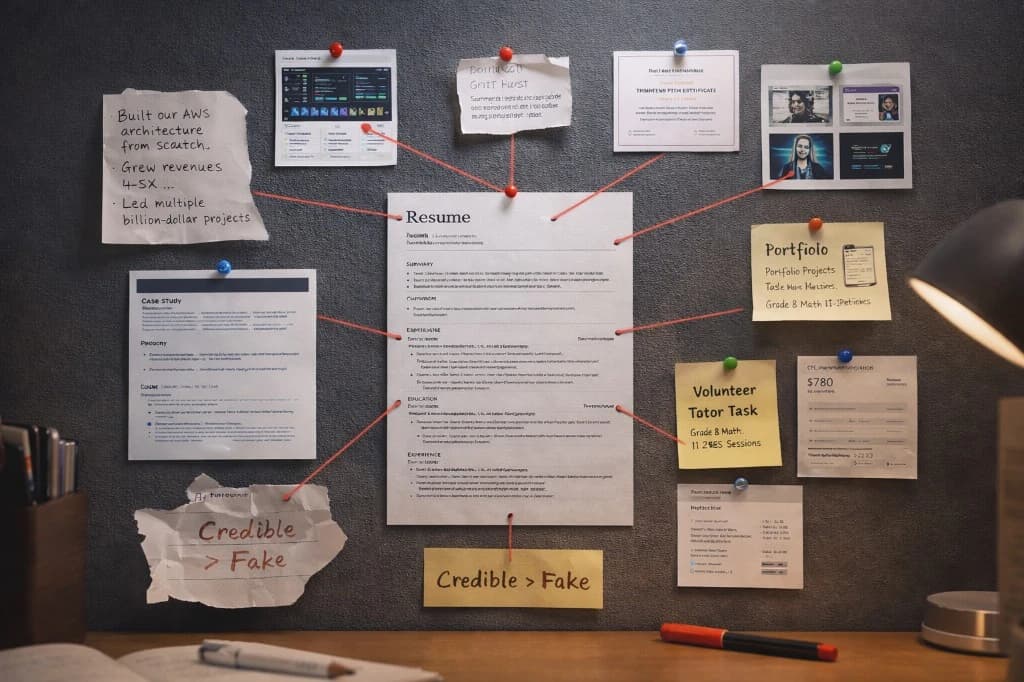
You do not need fake experience to look stronger. You need better proof. That is a very important difference. Because recruiters do not always need full-time experience from a fresher. But they do need signals that say: this person is serious; this person has tried relevant work; this person can explain what they have done; this person is worth evaluating. That means the real fresher challenge is not to look senior. It is to look credible and relevant.
For the full skill, proof, and positioning framework, read Skill Gap Analysis for the Job You Actually Want (/blog/skill-gap-analysis-for-the-job-you-actually-want). To put honest proof on paper, pair this with How Freshers Should Tailor a Resume for Internships and Entry-Level Roles (/blog/fresher-resume-for-internships-entry-level-roles). To schedule learning, proof, and resume updates over four weeks, use 30-Day Plan to Close Skill Gaps Before You Apply (/blog/30-day-plan-to-close-skill-gaps-before-you-apply).
What counts as proof for a fresher
Proof can come from many places — not only a big-name internship.
- Projects
- Mini-case studies
- Internships
- Certifications with output
- Tool-based assignments
- Portfolio work
- GitHub work
- Role-relevant volunteer work
- Campus responsibilities
- Freelance tasks
- Simulated work
The problem is not always lack of opportunity. The problem is that many freshers do not package these things well enough.
Better ways to build proof
1. Build one strong project
Not ten weak ones. Depth and clarity beat a long list of shallow attempts.
2. Create role-relevant mini work
Short, targeted work samples help recruiters see how you think in the role family.
- Marketing: analyze a brand campaign.
- Data: clean and visualize a dataset.
- HR: design a hiring tracker or candidate workflow example.
- Sales: create outreach simulations or customer flow examples.
- Software: build a usable mini feature or app.
3. Turn learning into visible output
Do not just complete a course. Create something from it — a small deliverable you can show and describe.
4. Document your work properly
Make proof easy to find and easy to understand.
- Portfolio
- GitHub
- LinkedIn post
- Case study
- Dashboard screenshot
- Project explanation
5. Learn enough to explain, not just enough to list
Recruiters trust explainable proof more than long tool lists.
Final thought
Freshers do not need fake experience. They need visible proof, stronger projects, better explanations, and more intentional role relevance. That is how you look stronger honestly.
Closing section
FAQ
Resume guides
Related Resume Guides
પ્રાઇસિંગ
તમારો પ્લાન પસંદ કરો અને ઝડપથી શરૂઆત કરો
ફીચર્સ, ભાવ અને ઉપયોગ સ્પષ્ટ રીતે સરખાવો, પછી તમારા લક્ષ્યને અનુરૂપ પ્લાન પસંદ કરો.
આગલું પગલું
તમારા રેઝ્યૂમેને સાચા જૉબ ડિસ્ક્રિપ્શન સામે ચકાસો
Apply પહેલાં JD match, keyword visibility અને skill gaps જુઓ.
સંબંધિત વાંચન
5તાજેતરના લેખો
6