Why Qualified Candidates Get Rejected Before Interviews
అవలోకనం: Qualified candidates can still get rejected before interviews if their resume lacks clarity, role-fit, and visible proof. Learn what hiring teams notice first.

Introduction
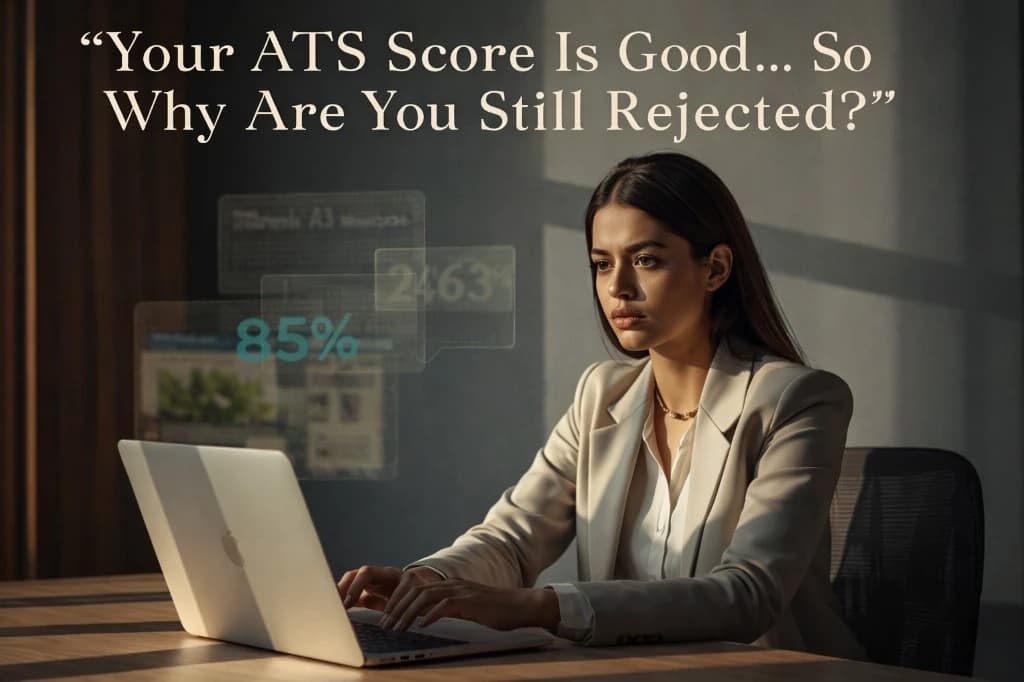
A lot of candidates think rejection starts after the interview.
It does not.
For many people, the real rejection happens much earlier. It happens when the application never crosses the shortlist stage.
That is why someone can be intelligent, sincere, capable, and genuinely suited to a role, yet never get the chance to prove it in conversation.
This is one of the most misunderstood parts of job search.
Candidates often think:
- maybe the company is unfair
- maybe the market is too bad
- maybe only referrals work
- maybe the ATS rejected me
- maybe I am just unlucky
Sometimes these things do play a role. But very often, the more practical explanation is this: the application did not create enough confidence to move you forward
That is very different from saying you were not good enough. It means you were not visible enough.
The shortlist stage is a filter for clarity, not just talent
Before interviews evaluate:
- communication
- confidence
- depth
- thinking
- personality
The shortlist stage evaluates:
- fit
- relevance
- clarity
- proof
- credibility
That means your application has to answer some basic questions fast:
- What role does this person fit?
- Do they seem aligned to this JD?
- Can I quickly see evidence of useful skills?
- Does this profile look serious enough to evaluate further?
If the answer is not clear, you may get rejected before the interview stage even if you could perform well in the role.
Why qualified candidates still get filtered out
1. They sound too generic
A generic profile is a weak profile in the eyes of hiring teams. If your summary, skills, and bullets feel broad, the recruiter struggles to place you.
2. Their proof is not strong enough on paper
You may have done useful work. But if it is written as:
- helped in project
- worked on reports
- assisted in marketing
- participated in event
then your actual value is hidden.
3. They apply with one resume to very different roles
That creates mixed signals.
4. Their strongest fit is buried
The recruiter should not need effort to find your relevance.
5. Their language is not role-aware
The JD may ask for one kind of signal, while the resume shows a weaker or more generic version of the same work.
Why early rejection feels worse than interview rejection
Interview rejection at least gives you a signal: you were considered.
Shortlist rejection often gives silence. That silence makes candidates doubt themselves.
But silence does not always mean:
- you are not capable
- your background is weak
- your learning is useless
Sometimes it simply means: your profile did not become easy enough to shortlist. That is painful, but it is also fixable.
What recruiters look for before interviews
A recruiter is not always trying to identify the absolute best human being. They are often trying to identify:
- credible next-step candidates
- relevant profiles
- easy-to-understand fits
- low-risk shortlist options
That means the first round is often not about maximum potential. It is about visible alignment.
This is why:
- clearer profiles win
- focused resumes win
- better-positioned freshers win
- role-aware applications win
Sometimes not because they are more talented. Because they are easier to shortlist.
How students and freshers get rejected early
Freshers are especially vulnerable here.
Why? Because they have less formal experience, so every visible signal matters more.
Recruiters rely more on:
- project quality
- practical tools
- internships
- certifications
- clarity of direction
- quality of writing
- seriousness of fit
That means a fresher who writes: “Made a dashboard project”
may lose against a fresher who writes: “Built a Power BI dashboard to visualize sales trends and present category-level insights.”
The second candidate may not be more talented. They are just more legible.
5 ways to reduce early rejection
1. Rewrite the summary for the role
A weak summary wastes your top space.
2. Move relevant proof higher
Projects, tools, and role-fit signals should be easy to spot.
3. Improve project and internship descriptions
Show:
- what you did
- what tools you used
- what output was created
- why it matters
4. Tailor based on the JD
Do not blindly reuse the same version.
5. Stop applying broadly without diagnosis
If the shortlist rate is low, fix the application layer before increasing volume.
Final thought
Qualified candidates do not always get rejected because they are weak. Many get rejected because their application does not reduce recruiter doubt fast enough.
That is why early rejection is often a communication problem before it is a capability problem.
So if you are not reaching interviews, do not only ask: “Am I good enough?” Also ask: “Is my fit visible enough?” That question usually leads to better fixes.
Closing section
FAQ
Resume guides
Related Resume Guides
About the Author
Software Engineer at Mobiloitte
Software Engineer at Mobiloitte, specializing in scalable AI architectures for resume optimization and interview assessment.
ప్రైసింగ్
మీ ప్లాన్ ఎంచుకుని త్వరగా ప్రారంభించండి
ఫీచర్లు, ధరలు, వినియోగం స్పష్టంగా పోల్చి, మీ లక్ష్యానికి సరిపడే ప్లాన్ ఎంచుకోండి.
తదుపరి దశ
మీ రెజ్యూమేను నిజమైన జాబ్ డిస్క్రిప్షన్తో చెక్ చేయండి
Apply చేయడానికి ముందు JD match, keyword visibility, మరియు skill gaps చూడండి.
సంబంధిత చదువు
13తాజా వ్యాసాలు
6