
Fresher Interview Prep When You Have Little Work Experience
கண்ணோட்டம்: Low experience does not mean weak interview prep. Learn how freshers can prepare using projects, internships, tools, and better answer structure.

Introduction
A lot of freshers go into interviews already feeling behind. They think:
- I do not have enough experience
- others probably have better internships
- I have not worked in a real company long enough
- what will I even say?
That mindset hurts interview performance before the interview even begins.
Because the truth is: Freshers are not expected to have years of experience. Interviewers know that.
What they usually want to check is:
- do you understand the role?
- have you built any useful proof?
- can you explain your projects clearly?
- are you serious about this field?
- do you sound trainable, relevant, and prepared?
That means low experience does not automatically mean weak interview performance. Weak preparation does.
And fresher interview prep becomes much stronger when you stop focusing only on what you do not have and start using what you do have properly.
What freshers can use as proof
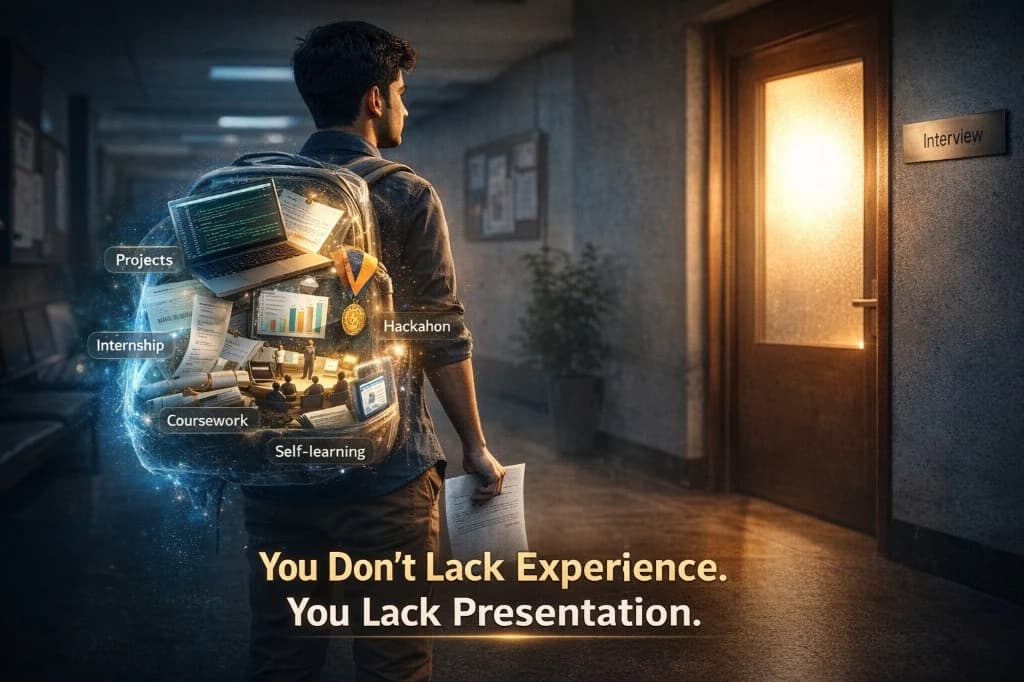
Freshers often underestimate their own material. Useful proof can come from:
- academic projects
- internships
- coursework
- certifications
- practical assignments
- college clubs
- competitions
- hackathons
- volunteer work
- campus leadership
- freelance work
- self-learning projects
The problem is usually not “I have nothing.” The problem is: “I do not know how to present what I have.”
That is why fresher interview prep should focus on:
- role relevance
- proof clarity
- answer structure
- confidence through preparation
What interviewers actually expect from freshers
They usually do not expect:
- deep industry expertise
- years of experience
- senior-level ownership
They usually do expect:
- basic role understanding
- practical effort
- clarity of motivation
- ability to learn
- examples from projects or internships
- reasonable communication
- seriousness and preparation
That means freshers do not need to sound senior. They need to sound: aware prepared honest useful coachable That is a much better target.
What freshers should prepare first
1. A strong self-introduction
Your introduction should answer: who you are what role you are targeting what relevant projects / internships / tools you have why this role makes sense for you
2. Your top 3–5 projects or proof examples
You should be able to explain: what the project was why you did it what tools you used what you personally did what result or output came out of it what you learned
3. Why this role
A lot of fresher answers sound weak here. Do not say: I want to grow I want an opportunity I am passionate
Say something more useful: why this field makes sense for your background what exposure made you interested what kind of work in the role fits your strengths
4. Basic role knowledge
If you are interviewing for: marketing, know campaign/content/analytics basics data, know tools and project logic HR, know sourcing/screening/coordination basics software, know fundamentals and project stack operations, know process and execution basics
5. Common interview questions
Prepare for: tell me about yourself why this role why this company tell me about your project what are your strengths what is your weakness tell me about a challenge you faced how do you handle learning something new
The biggest mistake freshers make in interviews
They speak too vaguely. They say: I did a project on machine learning I worked on marketing I helped in recruitment I was part of the team These answers are too weak. You need to make your work visible.
Weak
I did a data project.
Better
I built a data analysis project using Excel and Power BI where I cleaned the dataset, tracked trends, and created a dashboard to present findings more clearly. That difference matters a lot.
How freshers should answer when they have limited experience
Use this structure:
Visual framework
- 1
Context
What was the project / internship / situation?
- 2
Your role
What exactly did you do?
- 3
Tools / approach
How did you do it?
- 4
Outcome / learning
What came out of it?
- 5
Role relevance
How does it connect to the job you are applying for?
What freshers should not do
Do not:
- apologize too much for being a fresher
- fake tools you cannot explain
- memorize robotic answers
- give textbook definitions when asked about practical work
- keep answers too long and confusing
- speak without examples
- try to sound senior
The goal is not to impress by exaggeration. The goal is to build trust through clarity.
Final thought
Freshers do not need long experience to perform well in interviews. They need:
- better proof selection
- clearer project explanation
- stronger role awareness
- more practice speaking
- better structure
If you prepare that way, you stop sounding like “just another fresher.” You start sounding like a fresher who is ready to be evaluated seriously. That is a big difference.
Related reading on GyanBatua
Keep building interview readiness with:
Closing section
FAQ
Resume guides
Related Resume Guides
About the Author
Full Stack Software Engineer at Mobiloitte
Full Stack Software Engineer at Mobiloitte, helping freshers navigate placement prep and software workflows.
விலை திட்டம்
உங்கள் திட்டத்தை தேர்வு செய்து வேகமாக தொடங்குங்கள்
அம்சங்கள், விலை, பயன்பாடு ஆகியவற்றை தெளிவாக ஒப்பிட்டு, உங்கள் இலக்குக்கு பொருந்தும் திட்டத்தை தேர்வு செய்யுங்கள்.
அடுத்த படி
உங்கள் ரெஸ்யூமை உண்மையான ஜாப் டிஸ்கிரிப்ஷனுடன் ஒப்பிடுங்கள்
Apply செய்வதற்கு முன் JD match, keyword visibility, மற்றும் skill gaps பார்க்கவும்.
தொடர்புடைய வாசிப்பு
6சமீபத்திய கட்டுரைகள்
6