LinkedIn Profile Visibility: Be More Relevant to Recruiters
সংক্ষিপ্তসার: Learn how to improve your LinkedIn profile and recruiter visibility so you look more relevant, credible, and shortlist-worthy before you even apply.

Introduction
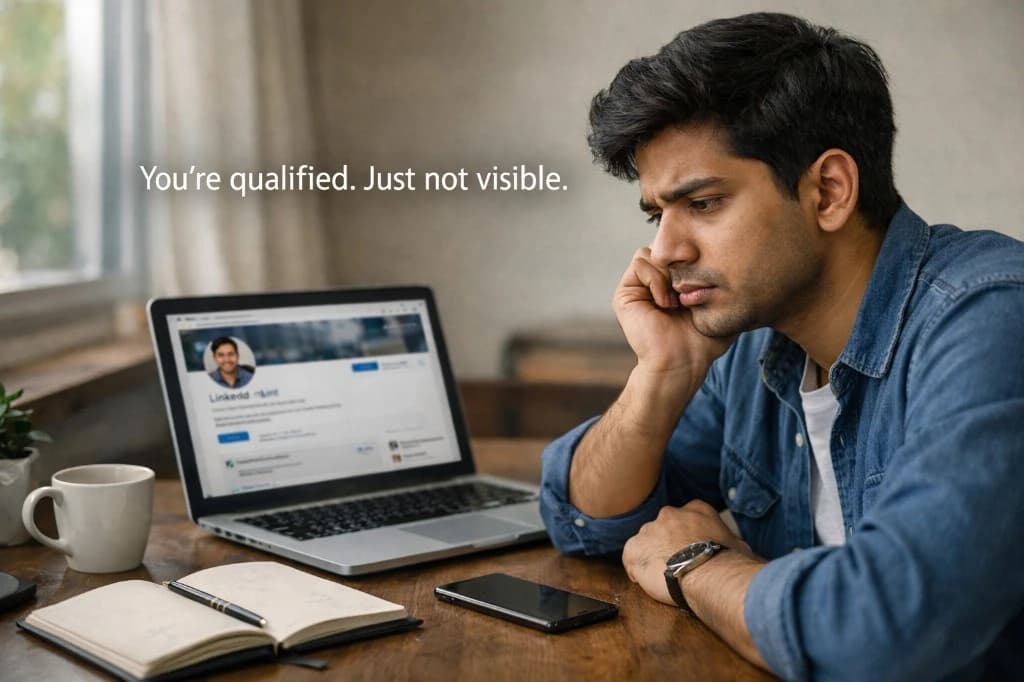
A lot of job seekers focus almost entirely on the resume. That makes sense, because the resume is still one of the most important parts of job search. But many candidates underestimate another layer: their LinkedIn profile.
For many recruiters, LinkedIn is a credibility check, consistency check, role-fit signal, seriousness signal, and quick research layer before shortlisting.
So even with a decent resume, a weak LinkedIn profile can quietly reduce confidence. A strong profile can increase relevance, trust, and recruiter readiness before the first conversation.
Why LinkedIn matters more than many candidates think
LinkedIn is not only for senior professionals or creators. For most job seekers, it usually plays three roles: credibility layer, discoverability layer, and role-fit layer.
- Credibility layer: recruiters compare your LinkedIn story with your resume.
- Discoverability layer: recruiters search by role titles, skills, tools, location, and function terms.
- Role-fit layer: your headline, About, experience, and projects shape how quickly recruiters classify your fit.
The biggest misunderstanding about LinkedIn
Many candidates think LinkedIn success means daily posting and follower growth. For most job seekers, the core value is simpler: be recruiter-readable, role-aligned, and trust-supportive.
- help recruiters understand your role direction quickly
- increase trust through consistency and clarity
- make proof and skills easier to evaluate
- support your resume rather than contradict it
What recruiter visibility actually means
Recruiter visibility is not just profile views. Better visibility means your profile is easier to understand, more aligned to role intent, and more usable for shortlist decisions.
A weak profile usually fails through outdated headlines, vague About sections, weak project visibility, inconsistent direction, and mismatch with resume positioning.
What recruiters usually notice first on LinkedIn
- Headline: does it signal clear role direction?
- Basic completeness: does profile look active, real, and usable?
- About section: does direction and strength show clearly?
- Experience/internship/project descriptions: do these look credible and relevant?
- Skills, featured links, and activity cues: do they build trust?
- Consistency with resume: does the same candidate story appear?
Why LinkedIn matters even more for freshers
Freshers often think LinkedIn does not matter because experience is limited. In reality, it can help showcase role direction, projects, internships, certifications, portfolio links, GitHub, and seriousness.
A fresher profile does not need to look senior. It needs to look structured, believable, role-aware, and more complete than average generic profiles.
The 5 layers of a strong LinkedIn profile
- Clear role direction
- Stronger role-aligned headline
- Useful About summary
- Visible proof through projects/internships/work samples
- Consistency with resume narrative
LinkedIn is not a replacement for your resume
Resume and LinkedIn serve different purposes. Resume is targeted and role-specific. LinkedIn is broader, public, discoverability-oriented, and trust-oriented.
They should not be identical, but they should not conflict. Role direction, proof quality, and positioning should feel consistent.
What freshers should focus on first
- clear role-directed headline
- better About section
- strong project visibility and descriptions
- properly framed internships and campus work
- skills and proof links such as portfolio or GitHub
LinkedIn Visibility Framework
Visual framework
- 1
Choose one primary role family
Avoid optimizing for unrelated roles.
- 2
Rewrite headline
Make role direction explicit and searchable.
- 3
Improve About
Summarize strengths, proof, and role alignment.
- 4
Strengthen experience/projects
Write as proof, not placeholders.
- 5
Add trust layers
Use featured links, portfolios, GitHub, and useful certifications.
- 6
Check resume consistency
Keep one coherent recruiter-facing story.
- 7
Remove confusing signals
Delete outdated or conflicting wording.
What good LinkedIn visibility can improve
- recruiter trust
- role-fit clarity
- passive discovery
- off-campus application support
- referral confidence
- perceived seriousness
Final thought
Your LinkedIn profile is not just social presence. It is part of how recruiters decide whether you look relevant, credible, intentional, and worth evaluating further.
Improving LinkedIn is not vanity. It is positioning. Better positioning improves trust before you even apply.
Closing section
FAQ
Related reading on GyanBatua
Link this article with:
Resume guides
Related Resume Guides
About the Author
Director - HR & Corporate Relations at Mobiloitte
Director of HR & Corporate Relations at Mobiloitte, specializing in recruitment strategy, placement readiness, and corporate partnerships.
প্রাইসিং
সঠিক প্ল্যান বেছে নিয়ে দ্রুত শুরু করুন
ফিচার, দাম ও ব্যবহার পরিষ্কারভাবে তুলনা করুন, তারপর আপনার লক্ষ্য অনুযায়ী সঠিক প্ল্যান নিন।
পরবর্তী ধাপ
বাস্তব জব ডেসক্রিপশনের সঙ্গে আপনার রিজিউম মিলিয়ে দেখুন
Apply করার আগে JD match, keyword visibility এবং skill gaps দেখুন।
সম্পর্কিত পড়া
6সাম্প্রতিক আর্টিকেল
6