
How to Practice Interview Answers Without Sounding Scripted
সংক্ষিপ্তসার: Learn how to practice interview answers naturally without sounding memorized. Improve confidence, structure, and fluency while staying human and role-relevant.

Introduction
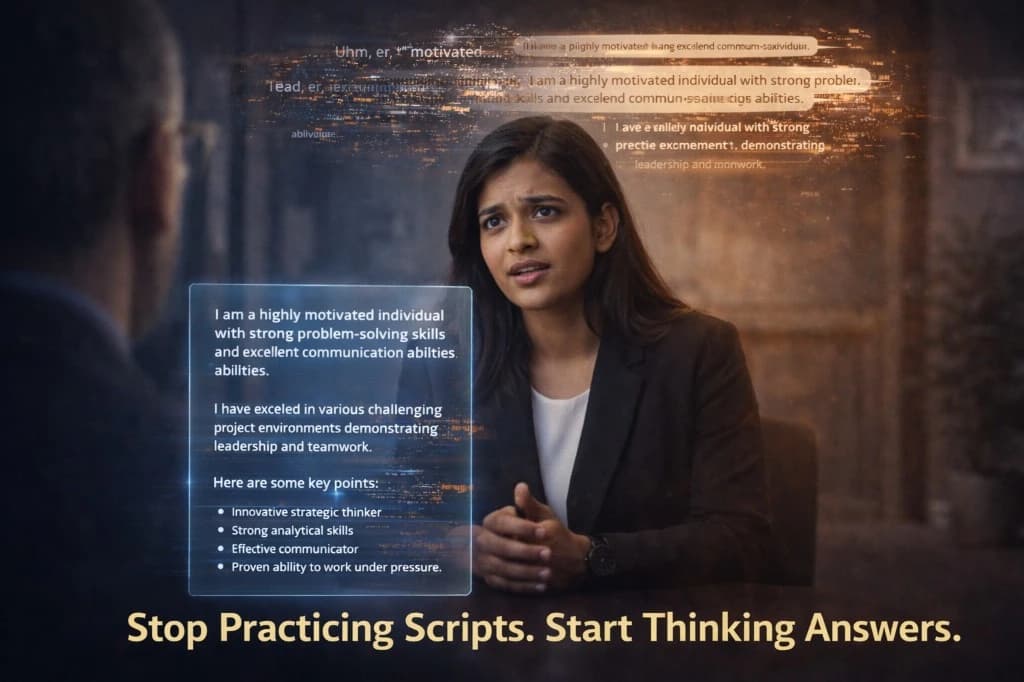
A lot of candidates are told to “practice answers.” That is good advice. But the way many people practice creates a new problem: they start sounding robotic.
You can hear it in the answer. The words are polished. The delivery is stiff. The tone feels memorized. The candidate sounds like they are reading from an invisible script.
That hurts trust. Because interviewers usually prefer:
- clarity over perfection
- relevance over drama
- natural confidence over memorized polish
So yes, you should practice. But you should practice in a way that improves fluency, not artificial delivery.
Why candidates sound scripted
Usually for one of these reasons:
- they memorize exact sentences
- they repeat the same answer too many times word for word
- they try to sound too formal
- they focus on perfect wording instead of clear meaning
- they do not understand their own example deeply
- they are afraid to pause and think
This creates a performance feeling, not a conversation feeling. And interviewers notice that quickly.
What to practice instead of exact scripts
Do not memorize full paragraphs. Practice these things:
1. Answer structure
Know how your answer will flow.
2. Key proof points
Know the example, project, or story you want to use.
3. Role relevance
Know how the example connects to the role.
4. Clear language
Know how to explain the idea simply.
This makes answers much more flexible.
A better way to practice interview answers
Use this pattern:
Visual framework
- 1
Opening
Start directly.
- 2
Example / proof
Use a real situation, project, or experience.
- 3
Outcome / learning
Say what happened or what you learned.
- 4
Role connection
Show why this matters for the job.
This gives your answer structure without making it sound memorized.
Practice out loud, not only in your head
This is a big one. Many candidates “prepare” mentally. But speaking out loud is different. You need to hear:
- your clarity
- your speed
- your confidence
- where you ramble
- where you freeze
- where your wording sounds unnatural
Oral practice matters much more than silent preparation.
Record yourself at least a few times
You do not need to do this forever. But recording your answers helps you notice:
- filler words
- fake confidence tone
- low energy
- poor structure
- rushed delivery
- overly long answers
This helps a lot.
How to sound natural
1. Use your own words
Do not use language that you never use in real life.
2. Keep answers clear, not over-polished
You do not need perfect English or perfect phrasing.
3. Pause when needed
Pausing is better than rushing into a memorized line.
4. Speak from proof
Real examples sound more natural than generic claims.
5. Practice multiple versions
If you practice only one version, you become rigid. If you practice 2–3 natural versions, you become flexible.
The right goal of practice
The goal is not: “sound impressive” The goal is: sound clear sound relevant sound believable sound prepared sound human That is what strong interview answers do.
Final thought
Practicing interview answers is important. But memorizing every line is not. The best answers feel prepared without feeling artificial. That is the balance you want.
So do not practice for performance only. Practice for: structure clarity fluency relevance confidence That is how you sound strong without sounding scripted.
Related reading on GyanBatua
Keep building interview readiness with:
Closing section
FAQ
Resume guides
Related Resume Guides
About the Author
Software Engineer at Mobiloitte
Software Engineer at Mobiloitte, specializing in scalable AI architectures for resume optimization and interview assessment.
প্রাইসিং
সঠিক প্ল্যান বেছে নিয়ে দ্রুত শুরু করুন
ফিচার, দাম ও ব্যবহার পরিষ্কারভাবে তুলনা করুন, তারপর আপনার লক্ষ্য অনুযায়ী সঠিক প্ল্যান নিন।
পরবর্তী ধাপ
বাস্তব জব ডেসক্রিপশনের সঙ্গে আপনার রিজিউম মিলিয়ে দেখুন
Apply করার আগে JD match, keyword visibility এবং skill gaps দেখুন।
সম্পর্কিত পড়া
9সাম্প্রতিক আর্টিকেল
6